Introduction
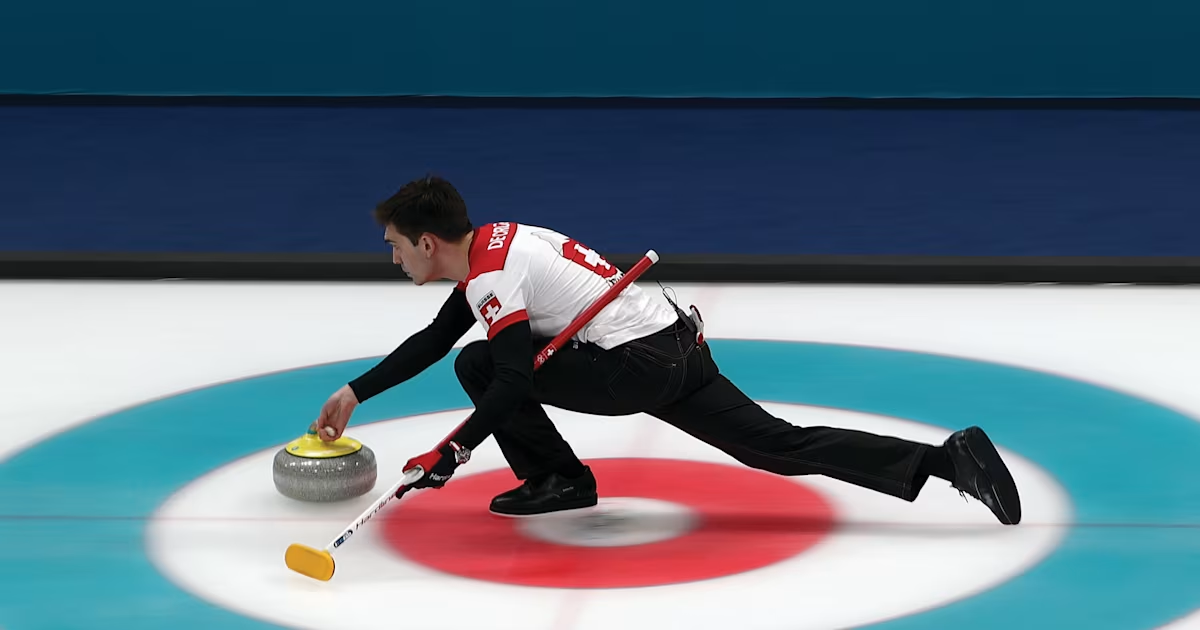
Curling, often referred to as “chess on ice,” has gained considerable popularity as a winter sport, particularly during the Olympic Games. Featuring teams sliding stone on a sheet of ice towards a target area, curling is a sport that combines strategy, teamwork, and skill. Its inclusion in the Winter Olympics dates back to 1998, and the sport has since captivated audiences around the world. As the next Olympic Winter Games approach, fans are eager to learn more about the competitors and the significance of this ancient sport.
History of Curling in the Olympics
Curling made its Olympic debut at the 1998 Nagano Games, which saw Norway win the first-ever gold medal in the men’s competition. Since then, the sport has continuously evolved, with the introduction of women’s events and mixed doubles competitions. In PyeongChang 2018, mixed doubles curling was showcased for the first time, increasing the sport’s appeal and encouraging a broader demographic of players and fans. The Olympics have provided a global platform for curlers to display their talents and have heightened interest in the sport back home.
Current Events and Teams
As of 2023, various national teams are preparing for the upcoming 2026 Winter Olympics in Milan-Cortina. Countries like Canada, Sweden, and Scotland have historically dominated the sport, boasting teams with rich legacies and remarkable track records. Current World Curling champions such as Team Canada and Team Sweden are anticipated to present strong challenges, while emerging teams from nations like China and South Korea are also showing impressive progress in international competitions.
The Significance of Curling
Curling is more than just a sport; it fosters camaraderie and sportsmanship among competitors. The strategic aspect of play promotes critical thinking, as teams must plan their shots and respond to their opponents’ moves carefully. Additionally, curling has a distinct cultural heritage, with roots that trace back to 16th century Scotland. The tradition and etiquette of curling, such as the practice of shaking hands after the game, emphasize mutual respect among players, further enhancing its allure.
Conclusion
The upcoming Olympics promise to be an exciting showcase for curling enthusiasts, as teams from around the globe vie for gold medals and national pride. As the sport continues to grow in popularity, more people are encouraged to participate in curling leagues and events, driving community engagement and fostering a love for the sport. Overall, the significance of curling in the Olympics is not only rooted in competition but also in its ability to unite people through the love of the game.