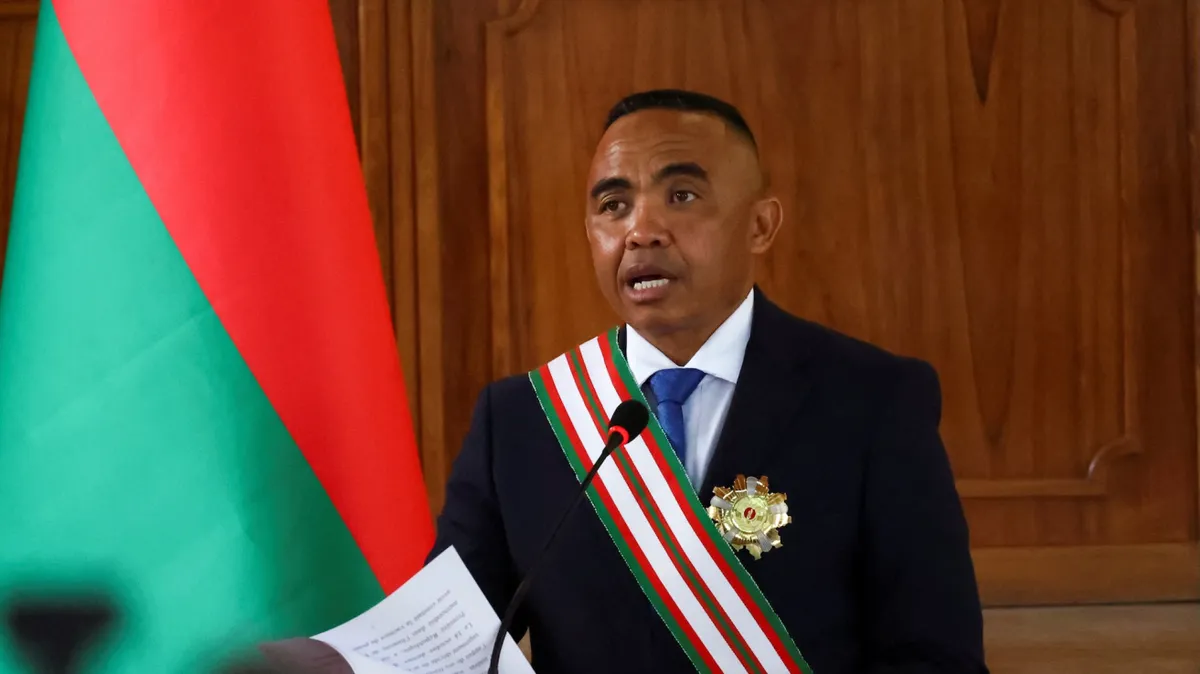
The recent coup in Madagascar has resulted in Colonel Michael Randrianirina assuming control of the nation, raising urgent concerns about the future of democracy and governance. This dramatic shift occurred on October 12, 2025, following weeks of service delivery demonstrations led by Gen Z protesters demanding accountability and reform. The High Constitutional Court declared the presidency vacant, facilitating Randrianirina’s rise to power.
In a bid to reassure the public, Randrianirina has promised to restore a democratic civilian government within an 18-24 month timeframe. However, skepticism looms over his commitment to this transition, especially given his military background and previous involvement in the 2009 coup. Political scientists have described this transfer of power as a “coupvolution,” indicating a complex interplay between military authority and political aspirations.
International reactions have varied, with the Southern African Development Community (SADC) opting not to suspend Madagascar, unlike its response in 2009. This decision has placed a unique responsibility on SADC to closely monitor Randrianirina’s adherence to the agreed roadmap for a return to civilian rule. Meanwhile, the African Union (AU) has suspended Madagascar due to the unconstitutional change of government, reflecting its strict stance against such actions.
Randrianirina’s military unit, CAPSAT, has been a significant player in Madagascar’s political landscape, previously participating in the 2009 coup. His unilateral decisions regarding government appointments have sparked discontent among the very protesters who initially supported the coup, leading some to express “buyer’s remorse” regarding their earlier enthusiasm. This disillusionment highlights the fragile nature of the new regime.
Reaction from the field
Concerns have been raised by both the SADC and the AU Peace and Security Council regarding the need for an inclusive dialogue process to restore civilian rule. Observers note that military juntas often promise a swift return to elections and civilian governance but frequently miss their own deadlines. The situation in Madagascar mirrors this troubling trend, as the timeline for presidential elections is currently set for 2027.
As the political landscape evolves, questions remain about Randrianirina’s ability to meet the promised deadlines for restoring civilian rule. Additionally, the SADC’s response to any potential deviations from the agreed roadmap is uncertain. Will they take decisive action if Randrianirina fails to adhere to the transition plan? Details remain unconfirmed.
In summary, the coup in Madagascar has not only reshaped the political landscape but has also raised significant questions about the future of democracy in the region. As the world watches closely, the next steps taken by Randrianirina and the international community will be crucial in determining the trajectory of Madagascar’s governance.