Introduction
Ed Gein, one of America’s most notorious criminals, is primarily remembered for his gruesome actions which inspired various horror films and literature. Beyond his infamy for his crimes, Gein’s interactions with law enforcement present a complex narrative worth exploring. This topic is relevant not only from a historical perspective but also in understanding the behaviors of criminals and their relationships with the police.
Background on Ed Gein
Born in 1906 in La Crosse, Wisconsin, Ed Gein had a troubled upbringing marked by the influence of his domineering mother. He became infamous in the late 1950s after the discovery of human remains and various grotesque items made from body parts in his home. Gein was ultimately convicted of murder and remained in psychiatric care until his death in 1984, but his psychological profile still interests criminologists today.
Gein’s Role with Police
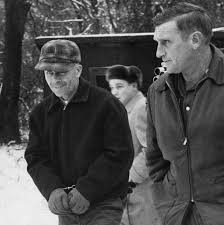
While civilians usually think of criminals resisting police investigations, Gein’s story took an unexpected turn. During his arrest, Gein did not exhibit the typical behavior of a fleeing criminal. Instead, he willingly provided police with information about his actions, including the details of his terrifying activities. At times, his cooperation with law enforcement seemed almost unsettling, as he calmly discussed his life and crimes without apparent remorse.
The Investigation Process
Police arrived at Gein’s residence in November 1957 based on a tip-off regarding the disappearance of local woman Bernice Worden. Upon searching his home, they found several disturbing artifacts, including body parts, masks, and clothing made from human skin. This shocking discovery raised a flurry of inquiries into Gein’s psychological state. During interrogations, Gein’s cooperative nature led to significant insights into a series of unsolved disappearances in the area.
Conclusion
The paradox of Ed Gein’s relationship with law enforcement raises questions about the motivations behind his cooperation. While he contributed crucial information that aided the investigation, it was also intertwined with his own psychological complexities. For modern criminologists and law enforcement, his case illustrates the importance of understanding the behavior of offenders not just as criminals but as individuals shaped by their life experiences. As discussions about crime and mental health evolve, the study of Gein continues to hold significance not only for historians but also for society’s understanding of criminal psychology.