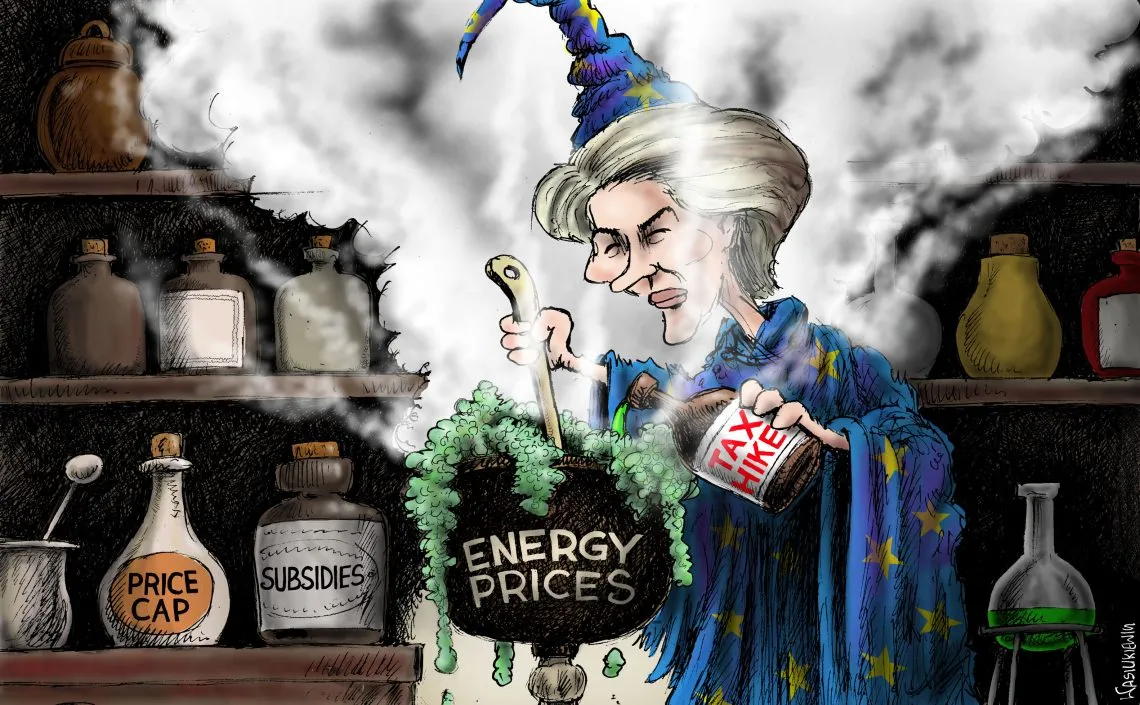
The closure of the Strait of Hormuz has blocked at least a fifth of the world’s oil and seaborne gas, triggering unprecedented disruptions in global energy supplies. This situation raises fears of a prolonged energy crisis in Europe.
Over the past decade, the world has faced a rapid succession of energy crises driven by military conflict, extreme weather, and supply-chain issues. The ongoing Iran war has caused the greatest disruption to oil and gas supplies in history.
Since the start of the Iran war, diesel prices in Europe have surged by an average of 26%, while petrol prices have risen by 12%. Additionally, the main European natural gas price benchmark, TTF, doubled from €30 to €60 per megawatt hour within weeks.
European governments have committed more than €11 billion in fiscal measures to cushion households and businesses during this energy crisis. The EU has also adopted the Middle East crisis Temporary State aid Framework (METSAF) targeting sectors like fishery, transport, and agriculture.
Officials express concern about future developments. Wopke Hoekstra stated, “We truly need to fasten our seat belts and at least reckon with the possibility that this will continue and potentially will get much worse.” Dan Jørgensen added, “Hope is not a strategy.”
Ursula von der Leyen emphasized the need for energy independence: “We must accelerate the shift to homegrown, clean energies. This will give us energy independence and security, and mean we are better able to weather geopolitical storms.” Meanwhile, analysts warn that the energy transition could introduce new vulnerabilities due to dependence on imports of low-carbon technologies concentrated in China.
The economic data available are not encouraging. As officials continue to assess the situation, it is clear that Europe faces significant challenges ahead as it navigates this critical juncture in its energy landscape.