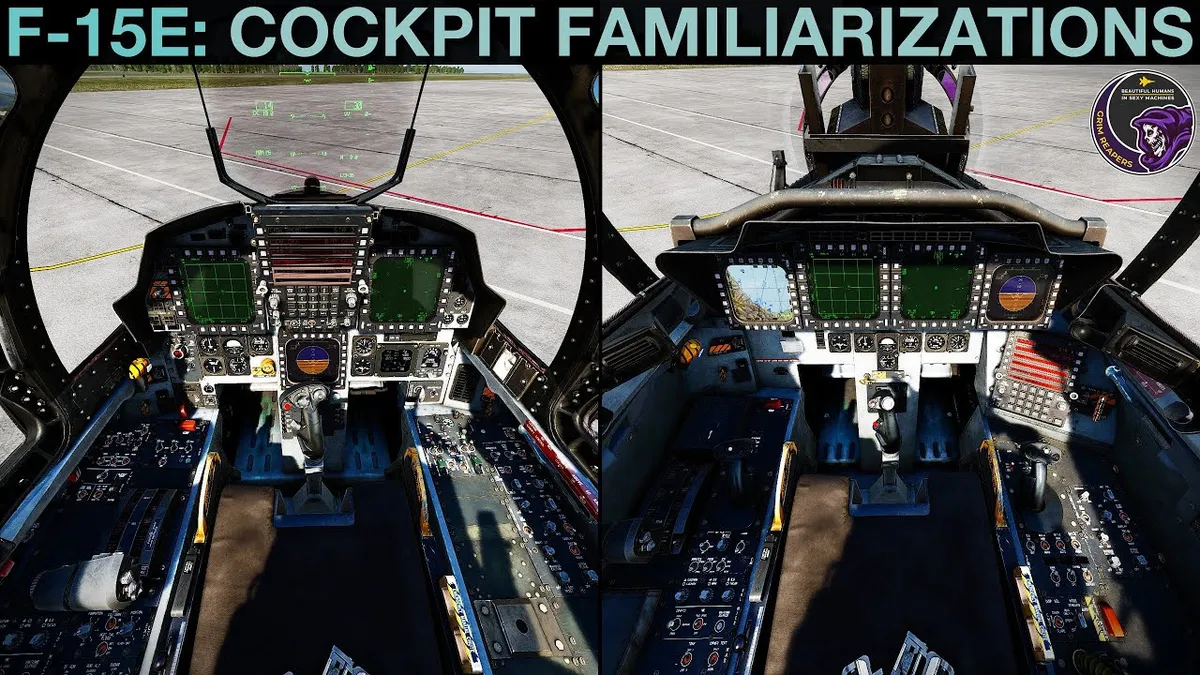
The U.S. experienced several losses of combat aircraft due to friendly fire as the conflict with Iran entered its third day.
The Kuwaiti military announced that multiple U.S. military aircraft had crashed, with the crews successfully rescued. Social media posts displayed images of Boeing F-15s going down. Shortly thereafter, U.S. Central Command confirmed that three F-15Es had crashed in Kuwait at 7:03 a.m. local time.
Friendly Fire Incident
“Kuwaiti air defenses mistakenly shot down U.S. Air Force fighter jets,” stated Centcom. All six crew members have been located and are reported to be in “stable condition,” it added.
The event follows a statement from the U.S. Central Command on March 1, indicating that three U.S. personnel had lost their lives and others were injured due to an attack on a tactical operations center. On March 2, Centcom reported that a fourth individual succumbed to injuries from the Iranian assault.
Iran has shown its capability to maintain and expand its drone and ballistic missile operations, which serve as the nation’s main response to U.S. and Israeli airstrikes that have decimated much of its military command and resulted in the death of leader Ayatollah Ali Khamenei.
U.S. Aircraft Crashes
A drone from Iran targeted a British military base located in Cyprus. Since the onset of the conflict on February 28, Iran has launched hundreds of ballistic missiles and deployed thousands of drones against Israel and various Gulf nations, resulting in casualties and damage to military installations, airports, and other critical infrastructure.
Qatar announced that its air force intercepted and brought down two Su-24 aircraft approaching from Iran.
The hostilities have also spread to additional regions. The Israel Defense Forces (IDF) reported that they were involved in clashes in Lebanon with the Iranian-backed group Hezbollah after the organization fired rockets into Israel.
Kuwaiti Military Response
“IDF forces have readied themselves for such an eventuality as part of routine combat preparations for Operation ‘Roaring Lion.’ Any adversary that jeopardizes our safety will face severe consequences,” stated Lt. Gen. Eyal Zamir, the Chief of the General Staff. “We need to brace ourselves for potentially extended days of fighting ahead.”
The Israeli military deployed its air force and naval forces to target what it claimed were numerous locations throughout Lebanon, including areas in Beirut. Additionally, the navy has participated in operations against drones, according to the IDF.
The IDF reported that it has continued to target locations throughout Iran following its announcement on March 1 that it had achieved air dominance over the western region of the nation. Currently, operations are being conducted directly over Tehran, involving over 700 missions and deploying more than 2,500 munitions. The IDF claimed to have eliminated over 150 ballistic missiles and 200 Iranian air defense systems, along with various other objectives.
Crew Recovery Updates
Israel announced that it has initiated air and sea resupply operations, with the first cargo planes arriving loaded with military supplies. The administration indicated that it anticipates these efforts will escalate to support ongoing missions.
On March 2 at the Pentagon, Chairman of the Joint Chiefs of Staff, Air Force Gen. Dan Caine, announced that the U.S. is deploying more tactical aviation resources to the area. He mentioned that Centcom commander Adm. Brad Cooper will modify troop levels as necessary.
Over the course of several weeks, the U.S. gathered a significant number of military assets in the area, deploying them in recent days. This included combat aircraft such as Lockheed Martin’s F-35s, F-16s, and F-22s, along with Boeing’s F/A-18s and F-15s. Additionally, the U.S. reported the use of A-10s. The B-2 bombers involved in the operations completed a mission lasting 37 hours. On the second day of conflict, the U.S. Air Force also conducted missions with B-1 bombers.
The authorization for the operation was granted on February 27 at 3:38 p.m. EST. According to Caine, U.S. Cyber Command and Space Command were the initial forces to act in order to incapacitate Iran. He mentioned that over 1,000 targets were hit within the first 24 hours. The strikes commenced at 1:15 a.m. EST on February 28, beginning with RTX Tomahawk cruise missiles. The Pentagon reported that it targeted 1,250 locations in the subsequent 48 hours.
The United States also deployed Lockheed Martin Precision Strike Missiles and, for the first time in combat, utilized Low-cost Unmanned Combat Attack System drones modeled after the Iranian Shahed-136. These operations were backed by a variety of resources, including maritime patrol Boeing P-8s, intelligence-gathering RC-135s, MQ-9 Reaper uncrewed aerial systems (UAS), Northrop Grumman Battlefield Airborne Communications Node communication relay aircraft, Boeing E-3 AWACS airborne early warning systems, and refueling aircraft. Centcom additionally mentioned the use of “special capabilities” that it could not disclose.
The surge in military operations has led to increased stock prices for numerous Western defense firms. However, analysts from Bernstein pointed out that such trading patterns are common in the initial phases of a conflict and tend to be temporary. Although this may boost government orders for munitions, the companies are primarily limited by their production capacity, according to the analysts.
Countries in the area have been struggling with Iranian drone attacks that targeted facilities in Saudi Arabia and were directed at other nations as well. On March 2, Saudi Arabia reported that it had intercepted five drones aimed at Prince Sultan Air Base. The United Arab Emirates announced it had intercepted an additional nine ballistic missiles, six cruise missiles, and 148 drones. Out of the 174 ballistic missiles launched at the UAE by Iran since February 28, 161 were destroyed, with 13 landing in the sea. Iran successfully hit the UAE with 44 out of 689 drones launched against its neighbor.
Qatar reported being targeted by two drones, leading QatarEnergy to halt its liquefied natural gas production and underscoring the broader economic repercussions of the conflict. The country intercepted seven ballistic missiles, and its air force and navy together managed to shoot down five drones, as stated by the defense ministry on March 2.
On March 2, the Greek authorities announced the deployment of four F-16 fighter jets and an air defense frigate to Cyprus following a drone attack from Iran on the island nation.