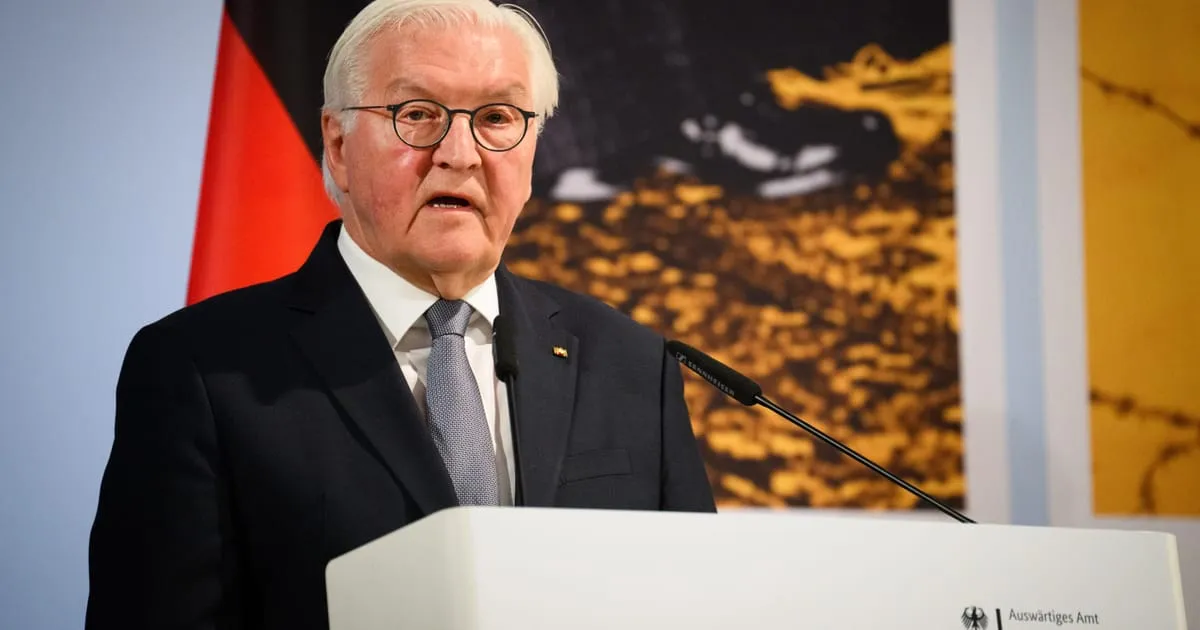
Before the recent developments, there was a prevailing expectation that Germany would maintain a cautious stance regarding its foreign policy, particularly in relation to the United States. However, a decisive shift occurred when German President Frank-Walter Steinmeier publicly condemned the Iran war as a ‘disastrous mistake’ and a violation of international law.
Steinmeier, who previously served as Germany’s foreign minister and played a role in negotiating the nuclear deal with Iran, stated, “This war is also — and please bear with me when I say this, as someone directly involved — a politically disastrous mistake.” His remarks signal a significant departure from Germany’s traditionally restrained diplomatic approach.
In the immediate aftermath of his statements, Steinmeier highlighted the deepening transatlantic rift, drawing parallels between the current situation and Germany’s historical distancing from Russia following the invasion of Ukraine in 2022. He emphasized that there will be no return to the pre-January 20, 2025, dynamics in transatlantic relations, saying, “The rupture is too deep.” This reflects a growing sentiment within Germany regarding its foreign policy direction.
Steinmeier’s role as president, which is largely ceremonial, allows him to express these views more freely than active politicians might. He urged Germany to become more independent of U.S. influence in defense and technology, stating that Germany’s military must become the backbone of conventional defense in Europe.
Trade figures underscore the urgency of this shift. In the first eight months of 2025, trade between the U.S. and Germany reached over 163 billion euros ($190 billion), yet China has overtaken the U.S. as Germany’s top trading partner. This economic pivot may further influence Germany’s strategic decisions.
Steinmeier’s comments also reflect a broader domestic debate over Germany’s stance on the Iran war and its relationship with the U.S. He criticized the current U.S. administration’s worldview, which he believes disregards established rules and partnerships, stating, “Our foreign policy does not become more convincing just because we do not call a breach of international law a breach of international law.”
As the situation evolves, the implications of Steinmeier’s remarks could reshape Germany’s foreign policy landscape and its role within Europe. The call for alternatives to U.S.-dominated technology in Europe may gain traction as Germany seeks to redefine its strategic priorities.
Details remain unconfirmed regarding the immediate reactions from U.S. officials or other European leaders, but Steinmeier’s bold stance marks a critical moment in the ongoing discourse surrounding Germany’s international relations.