Key moments
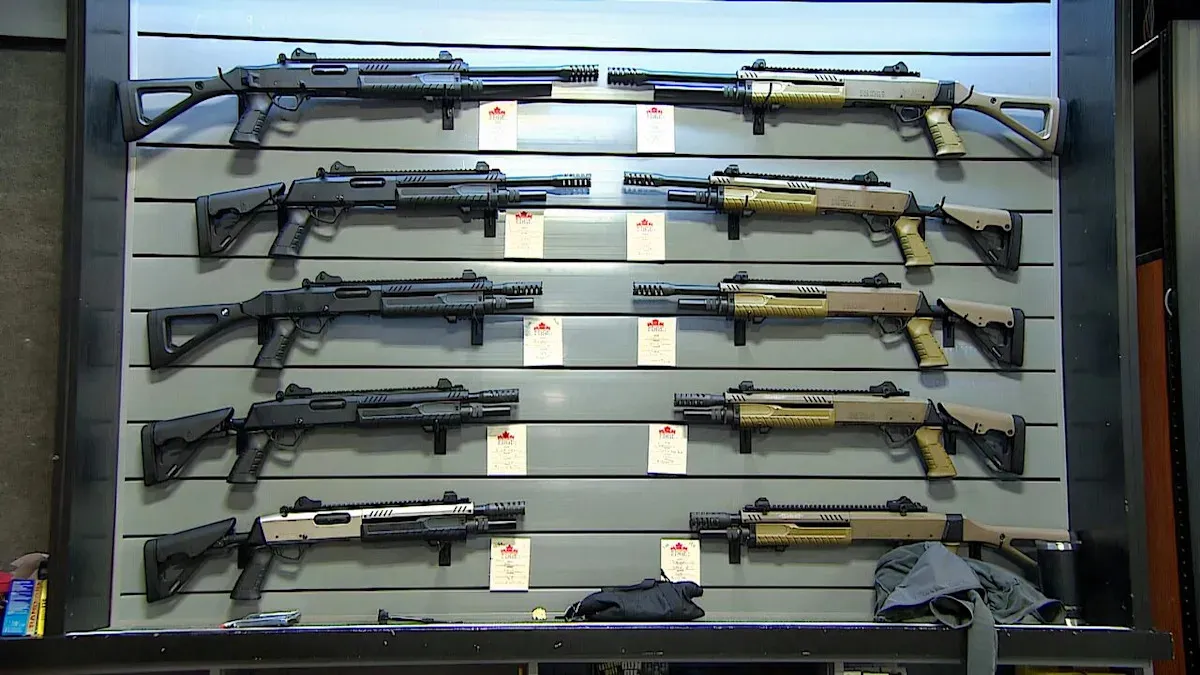
In a significant development regarding Canada’s gun buyback program, Alberta has reported over 7,000 banned weapons declared by residents, despite the provincial government’s resistance to the federal initiative. As of March 31, Public Safety Canada confirmed that more than 67,000 banned firearms have been declared nationwide by 37,869 firearm owners, indicating a mixed response to the program.
Ottawa’s gun buyback program, which aims to remove approximately 2,500 types of firearms deemed unsuitable for civilian use, has faced pushback from provincial governments. Alberta’s government has explicitly directed its entities to decline participation in the federal program, with officials stating, “Alberta’s government stands by its decision not to participate in the federal firearm confiscation program,” according to Mickey Amery.
Saskatchewan, on the other hand, has recorded the lowest per capita participation in the buyback program, with only 793 guns declared as of March 19. The federal government initially anticipated that 136,000 assault-style firearms would be declared, but only 47,000 have been reported so far. This discrepancy raises questions about the program’s effectiveness and public reception.
Gun owners across Canada are required to dispose of or deactivate prohibited firearms by October 30, regardless of whether they participate in the compensation program. Failure to comply could result in criminal sanctions and the loss of firearm possession licenses, adding urgency to the situation. Gary Anandasangaree, a federal official, expressed concern, stating, “It means that the citizens who are law-abiding and who have enrolled in the program, regrettably, will not be eligible for compensation.”
The context of this program stems from a broader federal initiative that has outlawed about 2,500 types of firearms since May 2020, with the government arguing that these weapons are designed for warfare rather than hunting or sport shooting. However, critics argue that the bans are politically motivated. Tracey Wilson from the Canadian Coalition for Firearm Rights remarked, “The government never actually had the intention of collecting firearms from people. The bans were largely political, and the minister admitted as much.”
As the deadline approaches, uncertainties loom over how Albertans who participated in the buyback program will be compensated. Kendrick Walker noted, “There is a little bit of a grey area there. We’re still waiting to see precisely what that means in terms of compensation.” Details remain unconfirmed.
The ongoing debate surrounding the gun buyback program underscores the complexities of firearm regulation in Canada, with provincial governments asserting their autonomy against federal mandates. As public safety remains a priority, the effectiveness and acceptance of such programs continue to be scrutinized by both supporters and opponents alike.