Reaction from the field
The recent heat dome phenomenon in Canada has raised significant public health concerns, particularly regarding the oil and gas industry. Public health physicians in British Columbia (B.C.) are urging for an independent assessment to evaluate the potential health impacts associated with this industry. The urgency of this call is underscored by the devastating effects witnessed during the 2021 heat dome, which highlighted the severe consequences of climate change.
In November 2025, the Health Officers’ Council of B.C. passed a resolution advocating for this independent assessment, emphasizing the need to understand the long-term health effects of the oil and gas sector. Dr. Tim Takaro, a prominent voice in this discussion, remarked, “If we really accounted for all of those health effects and in particular the long-term health effects of future generations, this industry would have been shut down a long time ago.” This statement reflects a growing concern among health professionals about the implications of environmental factors on public health.
Moreover, researchers have expressed alarm over the health outcomes for individuals living near fracking sites in the Peace River valley. Reports indicate an unusually high number of rare cancer diagnoses in this region, prompting further investigation into the potential links between fracking and these health issues. A study conducted from 2016 to 2019 revealed that pregnant women living near oil and gas wells exhibited higher chemical levels compared to the general Canadian population, raising red flags about the safety of these environments.
Dr. Ulrike Meyer, who has been closely monitoring the situation, noted, “The causation will be hard to prove. We know that the chemicals they use for the fracking process, that 11 are known to be carcinogenic.” This highlights the complexities involved in establishing direct links between industrial activities and health outcomes, yet the concerns remain pressing.
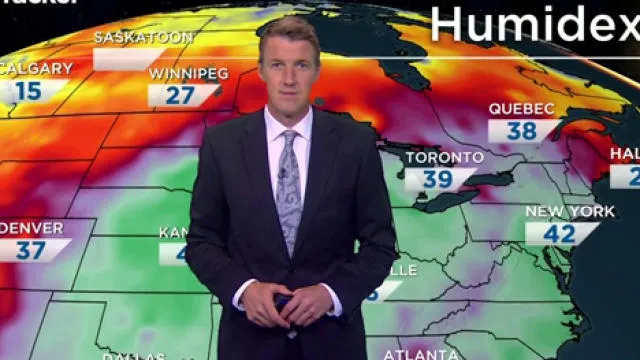
As the heat dome phenomenon continues to affect various regions, the National Weather Service has issued warnings about unprecedented and potentially deadly temperatures. In the Southwest, temperatures are expected to reach 100 degrees Fahrenheit in Phoenix, marking the earliest occurrence on record. Southern California is also facing extreme conditions, with temperatures projected to be 20 to 30 degrees above average.
The implications of these extreme weather patterns extend beyond immediate discomfort; they pose serious risks to public health. NWS forecasters have indicated that, given the unprecedented length and magnitude of this extreme heat wave, heat stress will be increasing each day. Meteorologist Marc Chenard added, “All of the country, even if you’re not necessarily seeing extremes, are going to see generally changing from cold to warm, or warm to cold to warm.” This shift underscores the pervasive nature of climate change and its far-reaching effects.
In light of these developments, Dawson Creek city council has voted in favor of issuing a letter of support for the Health Officers’ Council’s resolution, demonstrating local governance’s recognition of the issue. The call for an independent assessment is not just a local concern but resonates with broader discussions about the health impacts of climate change and industrial practices.
As the situation evolves, uncertainties remain regarding the full extent of the health impacts associated with the oil and gas industry and the long-term effects of climate change on public health. Details remain unconfirmed, but the urgency of addressing these issues is clear as communities grapple with the realities of a changing climate.