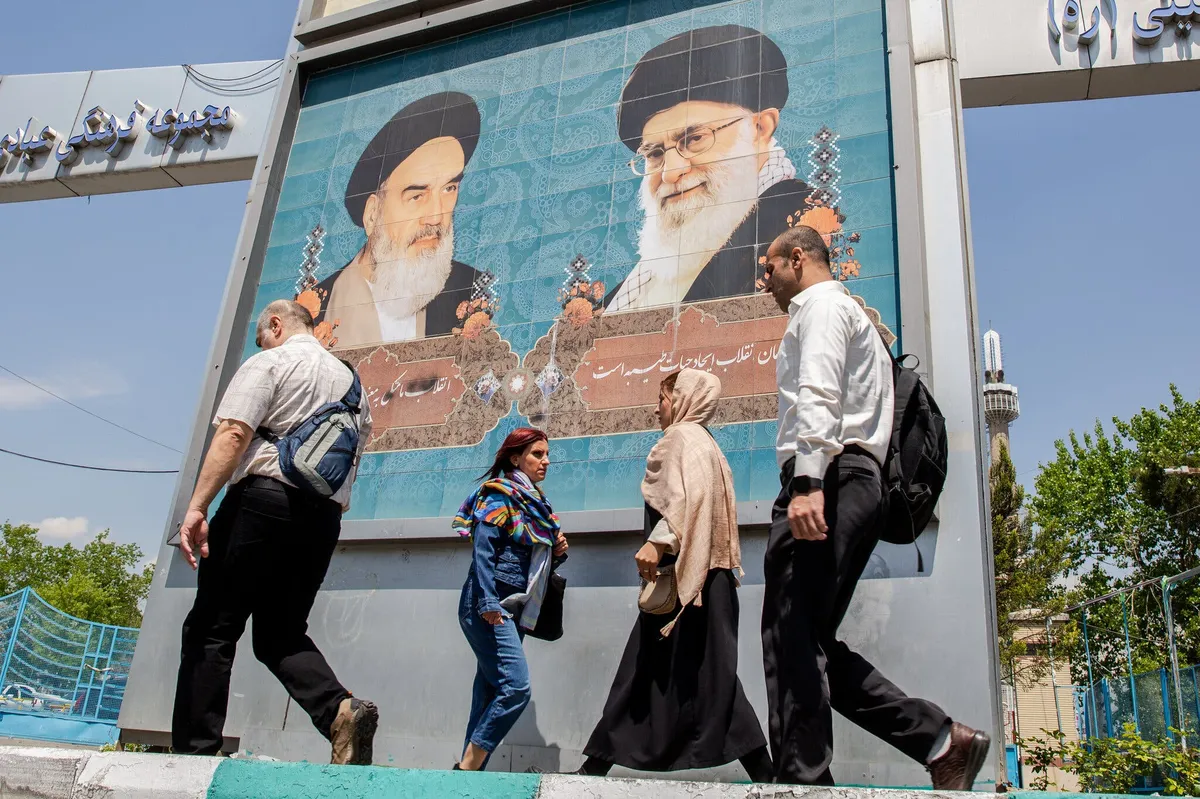
The US and Iran began negotiations and appeared to be making progress until Trump said he was ‘not happy’ with the way the talks were going on 27 February. This shift in diplomatic tone has contributed to escalating tensions in the region.
Recent Developments
In a significant escalation, Iran reported that over 1,300 civilians have been killed and nearly 10,000 civilian sites have been struck by Israeli and US forces. In retaliation, Iran’s army claimed to have targeted key Israeli military installations and US bases in Kuwait and Bahrain.
The Pentagon has confirmed that approximately 140 US service members have been wounded and seven have died since the initiation of Operation Epic Fury. Additionally, the US military is currently investigating a controversial strike on an Iranian girls’ school that resulted in the deaths of around 175 students.
Iran’s Islamic Revolutionary Guard Corps (IRGC) has also stated that it attacked a Liberia-flagged vessel in the Strait of Hormuz, which it claims was Israeli-owned. This incident highlights the increasing volatility in one of the world’s most critical maritime chokepoints.
In response to the Iranian military actions, Saudi defense forces successfully intercepted multiple waves of Iranian drones and ballistic missiles aimed at the kingdom. Meanwhile, the UAE reported intercepting 26 drones, although nine of these fell within its territory.
Casualties and Displacement
The conflict has had devastating humanitarian consequences. Reports indicate that 634 people have been killed and 816,700 displaced in Lebanon due to the ongoing violence. Iranian and Lebanese health officials have confirmed over 1,200 fatalities in Iran and 634 in Lebanon, alongside 12 in Israel.
International Reactions
The International Energy Agency has announced that member countries will release a record amount of oil from their reserves in response to the conflict, indicating concerns over potential disruptions in global energy markets.
Iran’s police chief, Ahmad-Reza Radan, warned that those supporting the country’s enemies would be treated as enemies themselves, further escalating the rhetoric surrounding the conflict.
In a notable statement, the US has expressed dissatisfaction with Israeli strikes on Iranian energy facilities, urging Israel to cease these actions unless approved by Washington. This reflects the complex interplay of alliances and tensions in the region.
Observers are closely monitoring the situation as the potential for further military actions looms. Alireza Tangsiri, naval commander of Iran’s Revolutionary Guard, stated that any ship attempting to navigate the Strait of Hormuz must obtain Iran’s approval or face attacks.
Details remain unconfirmed regarding the exact number of casualties and the broader impact of the conflict on global energy markets, leaving many questions unanswered as the situation develops.