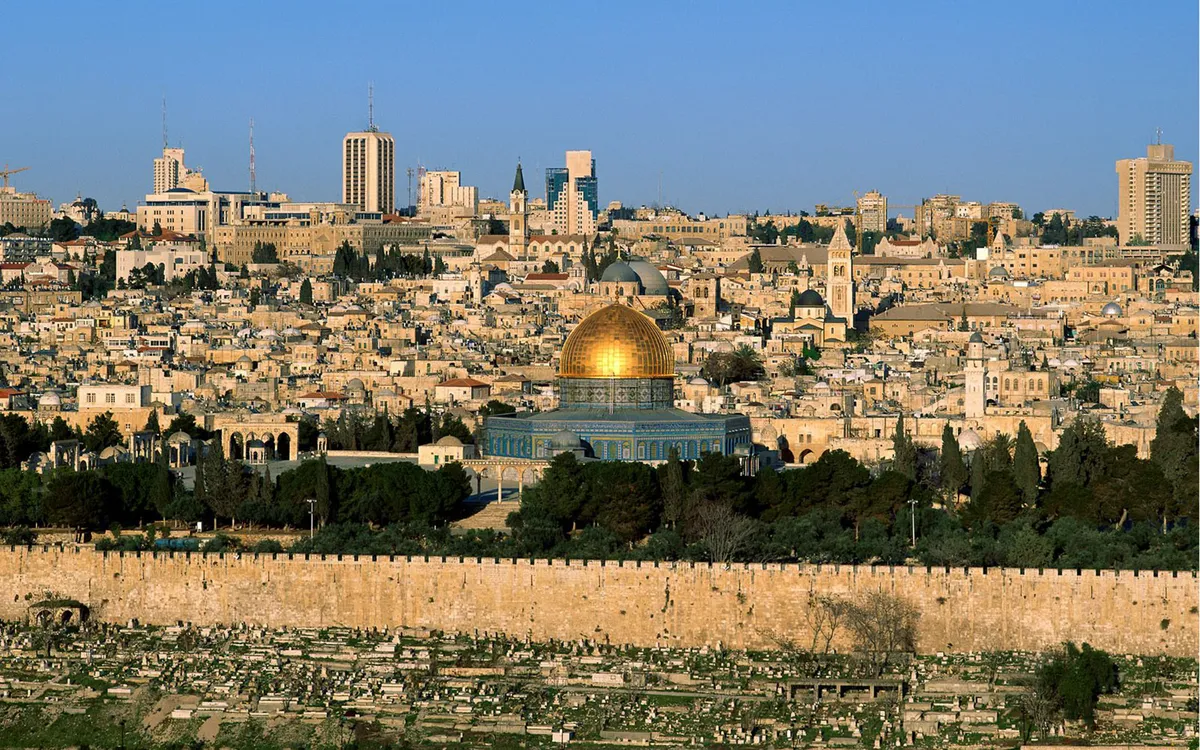
In a dramatic escalation of tensions in Jerusalem, Israeli security forces attacked and arrested Palestinian Christians attempting to reach the Church of the Holy Sepulchre on Holy Saturday. This incident coincides with Orthodox Easter celebrations, heightening the already fraught atmosphere in the city.
Israeli National Security Minister Itamar Ben-Gvir and his supporters also stormed the Al-Aqsa Mosque compound during this sensitive period, further inflaming religious sentiments. The Al-Aqsa Mosque and the Church of the Holy Sepulchre had previously been closed for 40 days during the US-Israeli war on Iran, a move that has drawn widespread condemnation.
The Status Quo agreement, which has regulated religious life in Jerusalem since the 16th century, is now under increasing strain. This agreement was recognized in the Treaty of Paris (1856) and the Berlin Treaty (1878), and its preservation is seen as crucial for maintaining peace among the city’s diverse religious communities.
Israeli authorities have recently intensified their policies against Palestinian residents, forcing two families in Jabal al-Mukabber to self-demolish their homes under the pretext of lacking building permits. Families resisting such orders face the threat of demolition by Israeli bulldozers and hefty fines.
These actions contribute to the growing number of Palestinian families displaced in recent months, as Israeli policies restrict Palestinian urban growth while expanding Israeli settlements. Sheikh Mohammad al-Abassi, the imam of Al-Aqsa Mosque, was also detained by Israeli forces, barring him from entering the compound for a week.
As tensions mount, observers note that prayer has become an act of resistance for many Palestinians. “Israel shows little regard for its ‘partners’ when they fail to exert pressure,” one local leader remarked, highlighting the precarious situation.
On Holocaust Remembrance Day, IDF Chief of Staff Lt.-Gen. Eyal Zamir emphasized the importance of remembering acts of bravery and resistance, stating, “We will remember the acts of bravery, the resistance, and the uprisings, the preservation of Jewish identity in the face of attempts to erase it.” This statement reflects the complex interplay of historical narratives that shape the current conflict.
Details remain unconfirmed regarding the full implications of these recent events, but the situation in Jerusalem continues to evolve, with many calling for urgent international attention to the ongoing crisis.