Before the Game: Expectations and Context
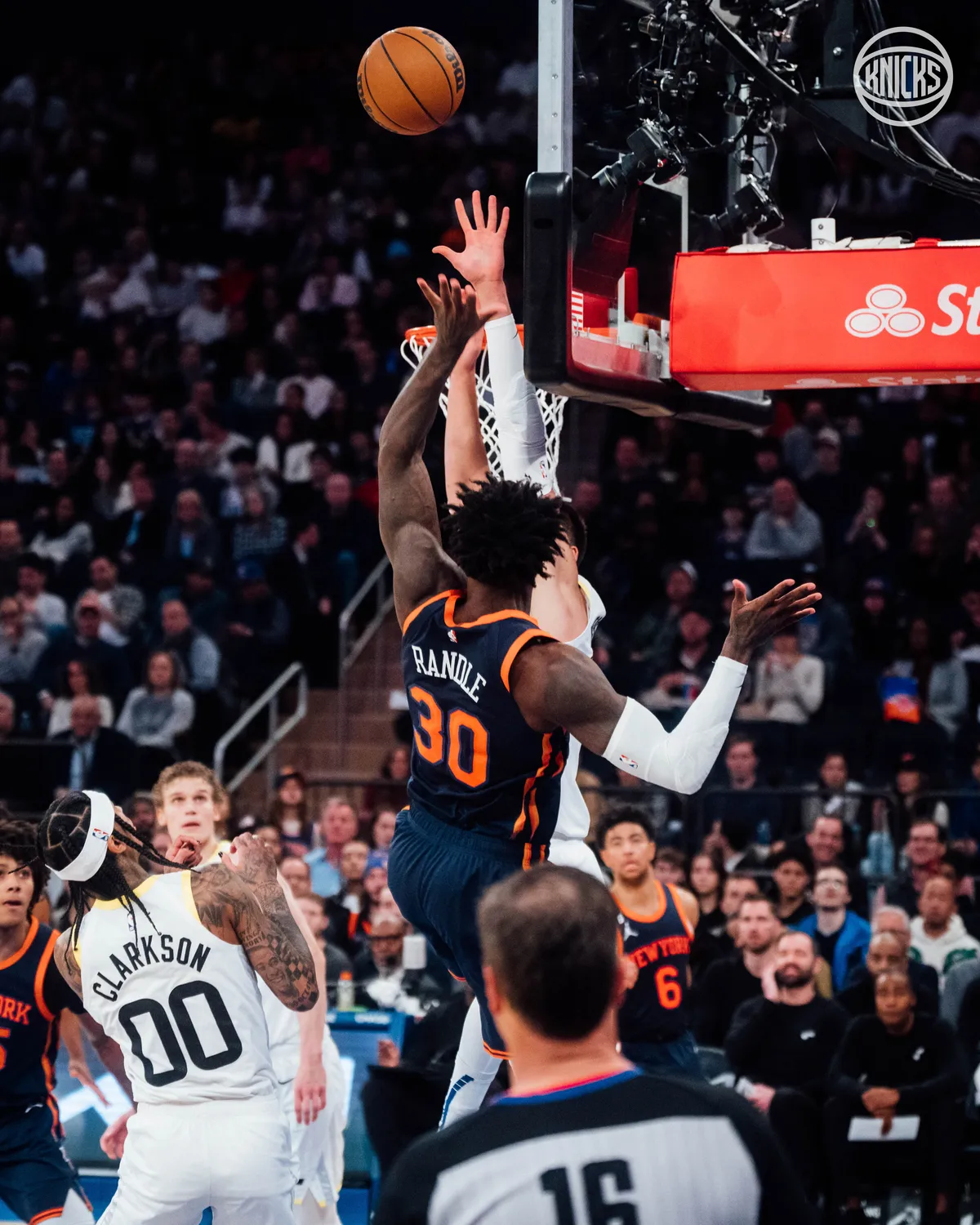
The New York Knicks entered their matchup against the Utah Jazz with a solid record of 41-25, positioning them as the third seed in the Eastern Conference. The Knicks were on the hunt for their 42nd win of the season, facing a struggling Jazz team that held a dismal record of 20-45. Historically, the Knicks had previously dominated the Jazz, having beaten them 146-112 in New York just a few months earlier. However, the Knicks were not without their challenges, having lost two straight games and three of their last four, raising concerns about their consistency as they approached this critical game.
Decisive Changes: Impact of Josh Hart’s Absence
As the game approached, the Knicks faced a significant setback with the announcement that Josh Hart would be ruled out due to a knee-related concern. Hart’s absence meant a shift in the starting lineup, which now included Jalen Brunson, Landry Shamet, Mikal Bridges, OG Anunoby, and Karl-Anthony Towns. This change was crucial as Hart had been a key contributor to the Knicks’ success throughout the season. The immediate effect of his absence raised questions about the team’s depth and ability to perform under pressure, especially against a Jazz team that was also struggling, having lost eight of their last ten games.
Direct Effects on the Teams
The Knicks’ recent performance had already been under scrutiny, and the loss of Hart only intensified the pressure on the remaining players to step up. Brunson, Shamet, and Bridges were expected to carry more of the scoring load, but the team’s recent losses indicated that they might struggle to find their rhythm without Hart’s contributions. Conversely, the Jazz, with their starting lineup featuring Keyonte George, Brice Sensabaugh, Cody Williams, Ace Bailey, and Kyle Filipowski, were looking to capitalize on the Knicks’ vulnerabilities. Despite their poor record, the Jazz had the opportunity to exploit the Knicks’ recent struggles and potentially turn their season around.
Expert Perspectives and Statistical Context
Experts noted that the Knicks had historically struggled on the West Coast, which added another layer of complexity to their matchup against the Jazz. The Knicks’ road record stood at 17-16, indicating that while they were competitive, they were not invincible away from home. The Jazz, despite their record, could pose a challenge if they managed to play cohesively. The Knicks’ previous win margin of 34 points against the Jazz served as a reminder of their potential, but the current circumstances suggested that this game could be much closer.
Looking Ahead: Implications for Both Teams
As the Knicks prepared for the game, the stakes were high. A win would not only help them secure their position in the playoffs but also restore confidence after a series of disappointing results. For the Jazz, a victory could serve as a much-needed morale boost, potentially igniting a late-season push. The dynamics of the matchup were set against a backdrop of contrasting expectations: the Knicks, with playoff aspirations, versus the Jazz, fighting to find their footing in a challenging season.
Conclusion: A Game of Uncertainties
As the tip-off approached at 9:00 p.m. ET, both teams faced uncertainties that could shape the outcome of the game. The Knicks needed to overcome the absence of Hart and their recent struggles, while the Jazz aimed to leverage their home advantage and capitalize on the Knicks’ vulnerabilities. Details remain unconfirmed as both teams prepared to clash in what promised to be a compelling matchup at the Delta Center in Salt Lake City, UT.