Introduction
Kilauea, one of the most active volcanoes in the world, is located on the Big Island of Hawaii and has been a focal point for scientists and tourists alike. Understanding its activity is crucial, not only for residents but also for visitors who flock to see its natural beauty. The ongoing eruptions of Kilauea hold significance for the local ecosystem, as well as the island’s economy largely driven by tourism. Recently, Kilauea has witnessed heightened activity that has raised concerns and sparked interest.
Current Activity and Events
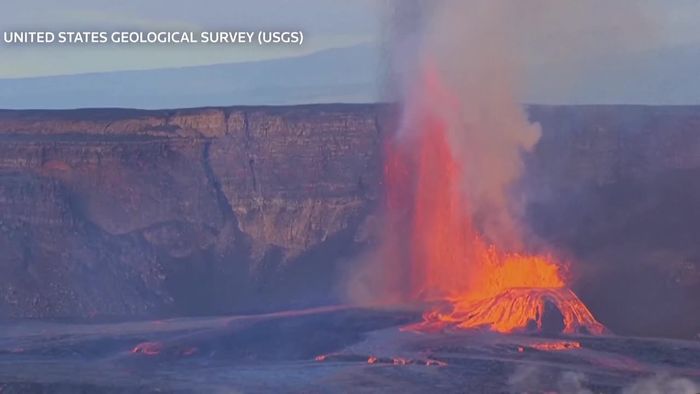
As of October 2023, the Kilauea volcano has entered a new eruptive phase, with lava flowing from its summit crater, Halema’uma’u. The Hawaiian Volcano Observatory reported that the eruption began earlier this month, following increased seismic activity detected weeks before. The lava lake within the Halema’uma’u crater has expanded significantly, and the bright lava glow can be observed from various points in Hawaii Volcanoes National Park.
The U.S. Geological Survey (USGS) has indicated that the current eruption is producing moderate fountaining of lava, reaching heights of about 50 to 100 feet. Officials have stated that while the eruptions are mesmerizing, there are safety concerns for nearby communities due to the release of volcanic gas and potential ashfall. Consequently, the Hawaii County Civil Defense Agency has been monitoring air quality closely and advising residents on the necessary precautions as the eruptions continue.
Impact and Community Response
The recent eruptions have impacted local businesses, especially those dependent on tourism. Many guided tours to view the lava flows have resumed, leading to an increase in visitor engagement at Hawaii Volcanoes National Park. However, some local residents are concerned about the implications for their safety and property. Community meetings have been held to update residents on safety protocols and emergency plans, particularly in areas closest to the volcanic activity.
Conclusion
Kilauea remains an active volcano with the potential for both awe-inspiring landscapes and serious risk to nearby communities. The recent eruption has reminded residents and visitors alike of the power of nature and the importance of preparedness. As Kilauea continues to evolve, it is essential to monitor reports from the USGS and local authorities. The ongoing developments will serve as a significant case study in volcano monitoring and disaster preparedness, and they will undoubtedly influence tourism and the local economy in the weeks and months to come.