Introduction
As nations on opposite sides of the globe, Norway and New Zealand present intriguing contrasts and similarities in culture, geography, and economy. Understanding these differences is significant not only for travelers but also for researchers and policymakers interested in international relations, environmental sustainability, and cultural exchanges.
Cultural Insights
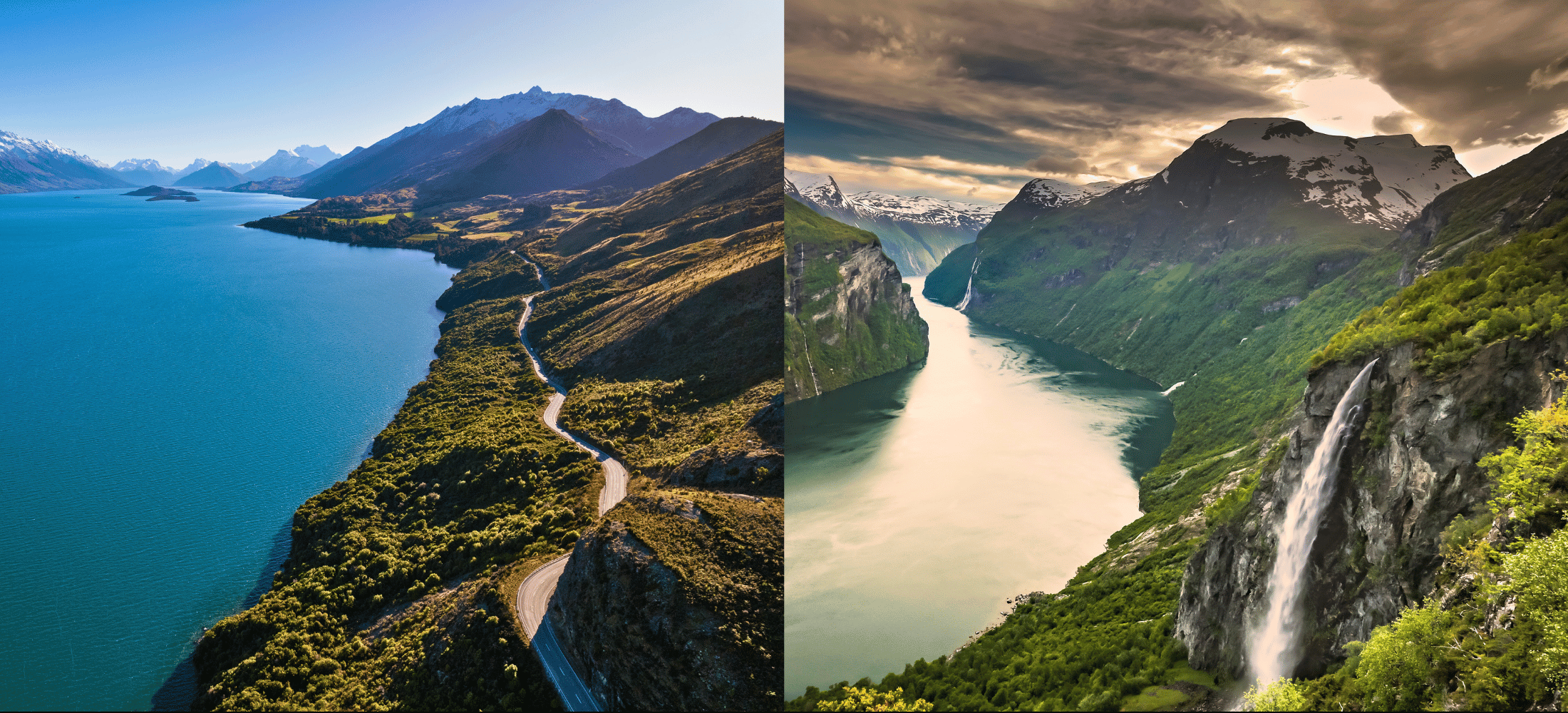
Norway, located in Northern Europe, is known for its rich Viking history, stunning fjords, and a strong emphasis on egalitarianism and social welfare. In contrast, New Zealand, situated in the southwestern Pacific Ocean, boasts a unique blend of Māori and European cultures, highlighted by its breathtaking landscapes and outdoor lifestyle. Both nations prioritize cultural preservation, with Norway focusing on its historical Viking roots and New Zealand embracing its indigenous Māori heritage.
Economic Landscape
Economically, Norway and New Zealand operate under markedly different systems. Norway, with its vast oil reserves in the North Sea, has one of the highest per capita incomes in the world, heavily supported by its sovereign wealth fund. Meanwhile, New Zealand’s economy is largely based on agriculture, tourism, and manufacturing, reflecting a more diversified economic structure. According to the World Bank, Norway’s GDP per capita stands at approximately $75,000, whereas New Zealand’s is around $48,000, showcasing Norway’s wealth stemming from natural resources.
Environmental Initiatives
Both Norway and New Zealand are recognized for their commitment to environmental protection. Norway aims to be carbon neutral by 2030, with significant investments in renewable energy, especially hydropower. Conversely, New Zealand is renowned for its conservation efforts and strives to protect its unique ecosystems, including the native forests and species found nowhere else on earth. In recent years, both countries have dedicated resources to combat climate change, though their approaches differ, with Norway emphasizing energy policy and New Zealand focusing on biodiversity.
Conclusion
In conclusion, comparing Norway and New Zealand reveals a rich tapestry of cultural narratives, economic frameworks, and environmental philosophies that continue to evolve. Both countries offer valuable lessons on sustainability and cultural integration. As global challenges such as climate change persist, the shared experiences of Norway and New Zealand serve as important examples for other nations. Understanding these countries not only highlights their uniqueness but also provides insights for future collaborations in various fields, including trade, environmental stewardship, and cultural exchange.