Introduction
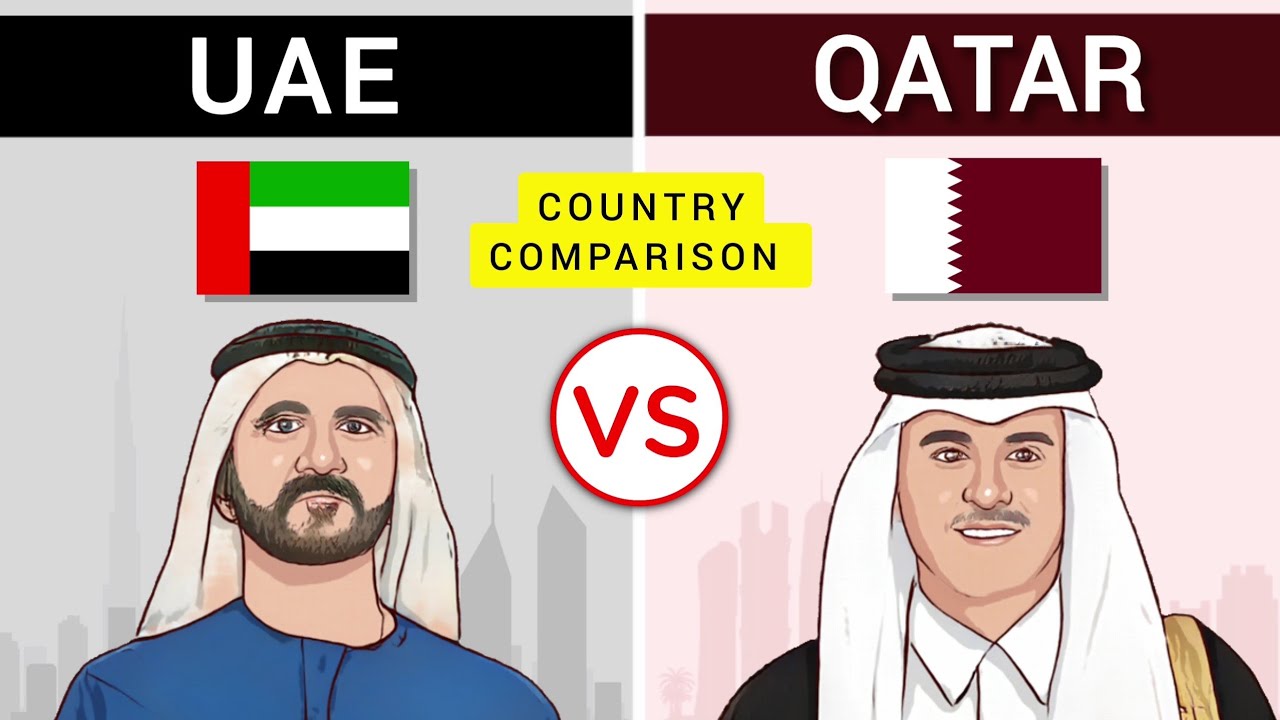
The Gulf region is home to two prominent nations, Qatar and the United Arab Emirates (UAE), both of which have made significant strides on the global stage economically and politically in recent years. Understanding the dynamics between these two countries is crucial, as they are influential players in the Middle East. Their contrasting political systems, economic models, and foreign policies have sparked discussions about their roles in regional stability and international relations.
Economic Landscape
Both Qatar and the UAE boast strong economies, primarily driven by oil and gas exports. Qatar, known for its vast natural gas reserves, has the highest GDP per capita in the world, largely due to its liquefied natural gas (LNG) exports. The UAE, meanwhile, has diversified its economy beyond oil, with Dubai positioning itself as a global hub for tourism, finance, and trade. The UAE’s Vision 2021 initiative further aims to reduce the economy’s dependence on oil, making it a model for other Gulf countries.
Cultural and Political Differences
Culturally, Qatar and the UAE exhibit both similarities and differences. While both nations share a rich Bedouin heritage and Islamic traditions, the UAE is known for its cultural diversity, with a significant expatriate population contributing to its vibrant society. Qatar, on the other hand, maintains a more conservative approach which is reflected in its cultural policies and public life. Politically, Qatar is a monarchy led by the Emir, while the UAE is a federation of seven emirates, each governed by its own monarch. This leads to different governance structures and levels of political engagement for citizens in each country.
Foreign Policy and Regional Influence
In terms of foreign policy, Qatar and the UAE have taken diverging paths, particularly in recent years. Qatar’s foreign affairs are characterized by a policy of neutrality and support for various political movements, including the Muslim Brotherhood, which has fueled tensions with neighboring states. Conversely, the UAE has aligned itself with Saudi Arabia and Egypt, taking a strong stance against the Brotherhood and playing a more assertive role in regional conflicts, including involvement in Libya and Yemen.
Conclusion
The ongoing differences between Qatar and the UAE highlight the contrasting paths taken by two influential Gulf nations. As they navigate their unique challenges and opportunities, both nations will play critical roles in shaping the future of the Middle East. For observers, understanding these dynamics is essential not only for analyzing regional politics but also for grasping the evolving economic landscapes and cultural aspects that characterize this pivotal area of the world.