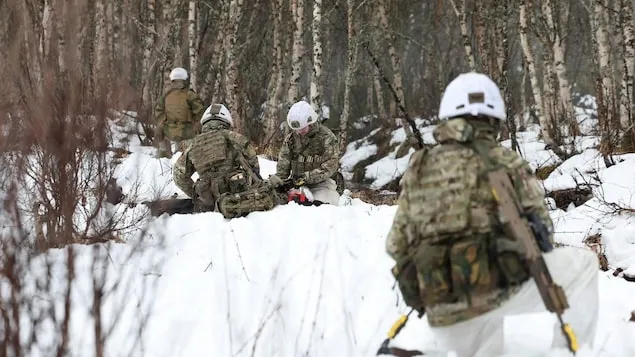
NATO Cold Response Training Exercise
In a significant military collaboration, Radio Canada reports that NATO’s Cold Response training exercise is currently taking place in Norway from March 9 to 19, 2023. The exercise involves approximately 25,000 soldiers from 14 nations, including Canada, the United States, the United Kingdom, Germany, and several Nordic countries.
Mark Carney, the Canadian Prime Minister, is observing the exercise, marking the first visit by a Canadian prime minister to Norway since 1980. This visit underscores the importance of Arctic security and the strengthening of military ties among allied nations. The Cold Response exercise is part of the Arctic Sentry initiative, aimed at improving coordination for security in the Arctic region.
The exercise is designed to test Norway’s ability to be reinforced in a crisis, particularly in challenging and inhospitable conditions. A senior government official remarked, “It’s very difficult terrain. It is cold, very sort of inhuman circumstances and geographic conditions.” This highlights the unique challenges faced by military forces operating in the Arctic.
During his visit, Carney is expected to meet with leaders from northern European countries, including Denmark, Sweden, Finland, and Iceland. Discussions will likely focus on regional security and the implications of the ongoing U.S. war with Iran, as well as the associated oil crisis. Michael Byers, a political expert, noted, “The Nordic countries coming together with Canada, having leaders visit the military exercise in northern Norway, this tells [U.S. President] Donald Trump that we’ve got Arctic security covered.”
The Cold Response exercise has been a recurring event for years and is part of a broader initiative to enhance Arctic security coordination among NATO allies. It reflects the growing recognition of the strategic importance of the Arctic region in global security dynamics.
As the exercise unfolds, officials emphasize the need to gain a better understanding of the military capacities required to address future crises and conflicts. A senior government official stated, “I think it’s first to gain an understanding of what we are facing as we go forward in different crises and conflicts, what our military capacity might need.” This sentiment underscores the proactive approach taken by NATO in preparing for potential challenges in the Arctic.
Details remain unconfirmed regarding the specific outcomes of the exercise, but the participation of such a large contingent of troops from diverse nations signals a strong commitment to collective defense and security in the region. The Cold Response training exercise serves as a critical platform for NATO allies to demonstrate their readiness and resolve in the face of evolving security threats.