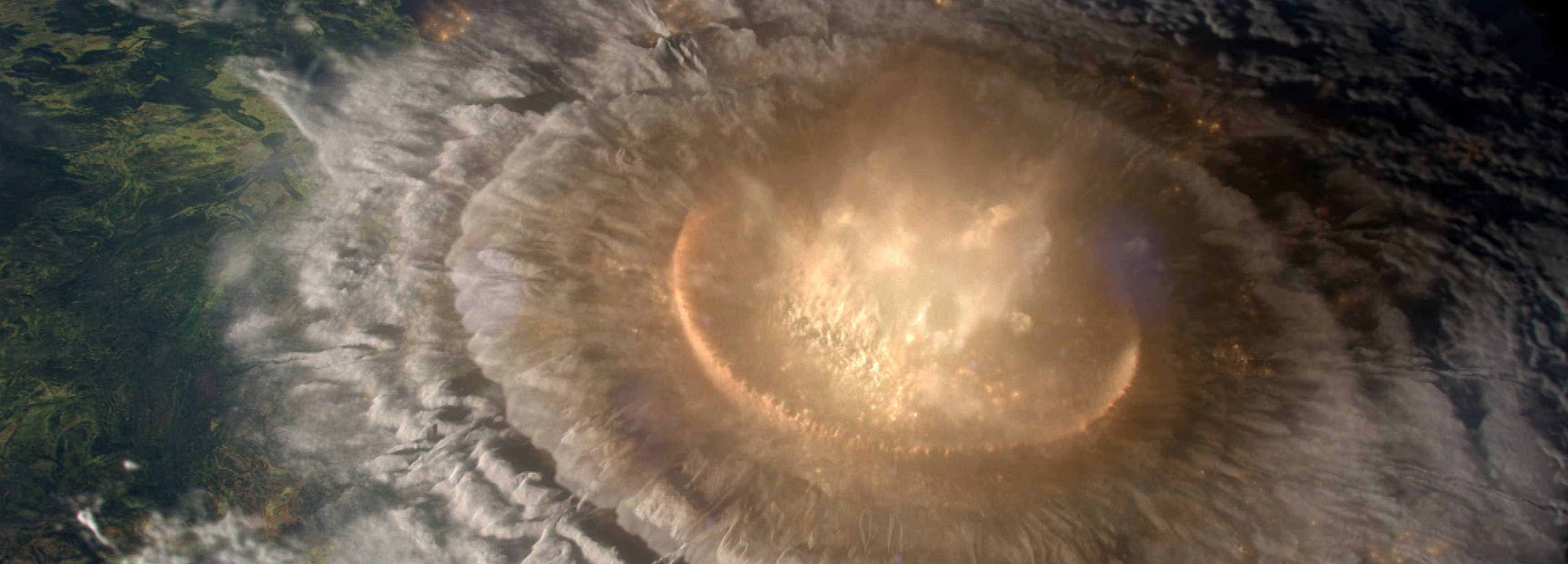
Understanding City Killing Asteroids
Asteroids, often depicted in science fiction as the harbingers of doom, are real celestial bodies that can threaten life on Earth. Among the numerous asteroids traveling through our solar system, those classified as city killing asteroids pose a considerable risk to densely populated areas. Defined as asteroids larger than 140 meters in diameter, these massive rocks have the potential to cause catastrophic damage upon impact, potentially wiping out entire cities.
Recent Events Highlighting the Risk
In 2023, scientists tracked several asteroids as they approached Earth, raising alarms about the close encounters with these heavenly bodies. One such incident occurred in June when an asteroid named 2023 YD7 zipped past Earth, coming within 1.5 million kilometers of the planet. Although it was a safe margin, it underscored the importance of continuous monitoring of Near-Earth Objects (NEOs), particularly city killing asteroids.
Potential Impact and Consequences
The consequences of a significant impact from a city killing asteroid could be disastrous. A collision could result in widespread destruction, loss of life, and long-lasting environmental effects. Researchers estimate that an asteroid striking a metropolitan area could generate energy equivalent to millions of tons of TNT. Significant impacts could result in fires, tsunamis, and even climate change due to the dust and particles thrown into the atmosphere, blocking sunlight for months.
Protective Measures and Mitigation Strategies
In light of these risks, international space agencies have ramped up efforts to detect and potentially divert these threats. NASA’s Planetary Defense Coordination Office is working on projects like the Double Asteroid Redirection Test (DART), which aims to demonstrate the feasibility of altering an asteroid’s orbit through kinetic impact. Furthermore, collaborations between spacefaring nations are becoming more common as global safety concerns mount.
Conclusion: The Importance of Preparedness
While the chance of a city killing asteroid impact is low, the ramifications of such an event necessitate that we remain vigilant and proactive. Awareness regarding the potential dangers of NEOs is crucial, as is continued funding and research into planetary defense technologies. As urban populations grow, so does the necessity for effective measures to ensure the safety of our cities against these celestial threats. By staying informed and investing in our planetary defense strategy, we can help safeguard our future against the threat of city killing asteroids.