Introduction
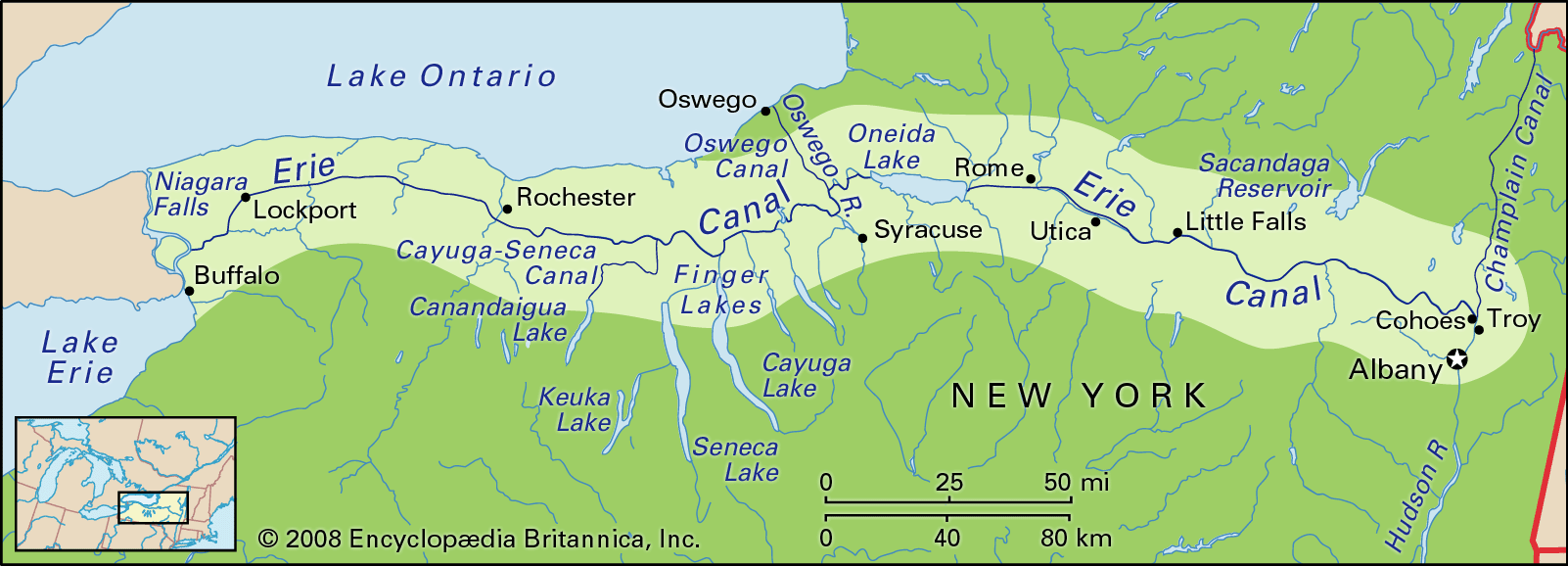
The Erie Canal, completed in 1825, is a historic waterway that transformed trade and transportation in the United States. Spanning over 363 miles from Albany on the Hudson River to Buffalo on Lake Erie, the canal played a crucial role in the economic development of New York and the nation. Its significance continues to resonate today as communities along the canal celebrate its influence on commerce and tourism.
A Brief History
The idea of constructing a canal across New York State was conceived in the early 19th century to facilitate trade and connect the Atlantic Ocean to the Great Lakes. Under the leadership of Governor Dewitt Clinton, the project was not without controversy, facing significant political and financial challenges. However, upon its completion in 1825, the Erie Canal dramatically reduced transportation costs and time, promoting the movement of goods such as grain, timber, and coal.
Economic Impact
The Erie Canal revolutionized the economy of New York State and the United States as a whole. The canal made New York City the country’s dominant port by making it easier and cheaper to ship goods from the Midwest to the East Coast. By the mid-19th century, the canal spurred urban growth, with cities like Syracuse and Rochester thriving along its route. According to a study by the New York State Canal Corporation, the canal generated an estimated $400 million in new economic activity annually.
Modern Developments
In contemporary times, the Erie Canal has evolved from a primary transportation route to a major recreational waterway. Boating, kayaking, biking, and hiking along the canal are popular activities, attracting millions of visitors each year. The canal has also been designated as a National Historic Landmark, preserving its history and encouraging tourism in upstate New York.
Conclusion
The Erie Canal stands as a testament to early American engineering and vision. Its historical significance as a vital trade link continues to be appreciated, while its recreational use has transformed it into a community asset. As the United States remains focused on infrastructure and economic development, the Erie Canal serves as an example of how a single project can shape an entire region, paving the way for future generations. The revitalization efforts aimed at maintaining the canal’s infrastructure are crucial for sustaining its legacy and ensuring its continued relevance in the modern era.