Introduction
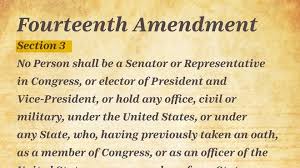
The 14th Amendment, ratified in 1868, is one of the pivotal amendments in the United States Constitution. It addresses citizenship rights and equal protection under the law, significantly shaping civil rights in America. The relevance of the 14th Amendment remains palpable today as ongoing debates surrounding equality, social justice, and immigration continue to surface in the contemporary political landscape.
Historical Context
The 14th Amendment was introduced in the aftermath of the Civil War during the Reconstruction era, primarily aimed at integrating formerly enslaved individuals into American society. Its most crucial sections include the Citizenship Clause, which grants citizenship to anyone born or naturalized in the United States, and the Equal Protection Clause, which mandates that no state shall deny any person equal protection under the law. These clauses have served as foundational elements in many landmark Supreme Court cases.
Notable Supreme Court Cases
Several landmark Supreme Court cases have shaped the interpretation and application of the 14th Amendment. For instance, in Brown v. Board of Education (1954), the Court ruled that racial segregation in public schools was unconstitutional, establishing the principle that separate is inherently unequal. Another significant case is Roe v. Wade (1973), where the Court held that a woman’s right to privacy, under the due process clause of the 14th Amendment, extends to her decision to have an abortion. These rulings underscore the Amendment’s critical role in advancing civil liberties and rights.
Current Relevance
In recent years, the 14th Amendment has become a focal point in discussions on immigration and voting rights. Debates surrounding the automatic citizenship of children born to undocumented immigrants and the legality of state voting restrictions all cite the Amendment as essential to their arguments. Activists and lawmakers alike continue to leverage its clauses to advocate for more inclusive policies that protect individuals from discrimination.
Conclusion
The 14th Amendment remains a cornerstone of American democracy, championing the ideals of equality and justice. As society faces new challenges related to civil rights and social equity, its principles will undoubtedly serve as a critical reference point for future legislation and judicial decisions. Understanding the historical significance and contemporary implications of the 14th Amendment is essential for anyone looking to engage in meaningful dialogue about human rights in the United States.