Introduction
The prime rate is a critical economic indicator that plays a significant role in determining interest rates for various financial products, including loans, credit cards, and mortgages. As a benchmark for lending rates, fluctuations in the prime rate can influence borrowing costs for consumers and businesses alike. Understanding the prime rate and its implications has become increasingly important for individuals navigating their financial decisions in a shifting economic landscape.
What is the Prime Rate?
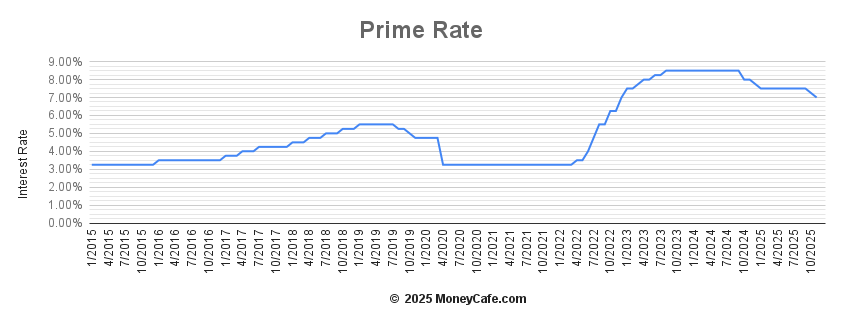
The prime rate is the interest rate that commercial banks charge their most creditworthy customers, typically large corporations. It serves as a baseline for various lending rates in the economy. In the United States, the prime rate is generally set at a rate 3% higher than the federal funds rate, which is controlled by the Federal Reserve. As of October 2023, the prime rate in the U.S. stands at 8.25%, reflecting recent adjustments made by the Federal Reserve in its efforts to combat inflation.
Recent Trends and Changes
In recent months, the prime rate has seen a series of increases as the Federal Reserve has adopted a more aggressive stance on monetary policy to control soaring inflation rates. Since March 2022, the Federal Reserve has raised the federal funds rate multiple times, contributing to a rise in the prime rate. This has led to increased borrowing costs for consumers seeking loans or credit. For instance, mortgage rates and interest on personal loans have climbed significantly as a response to changes in the prime rate. According to experts, the implications of these rate hikes could be profound, potentially dampening consumer spending and slowing economic growth.
Economic Implications
Changes in the prime rate signal the overall health of the economy. When the prime rate rises, it reflects a tightening of monetary policy by the Federal Reserve aimed at curbing inflation. This typically leads to higher costs for borrowing and can deter investment and spending by businesses and consumers. Conversely, a decrease in the prime rate can stimulate economic growth by making loans more affordable. Analysts suggest that understanding the prime rate’s trajectory is essential for predicting the economic outlook, especially in a time marked by economic uncertainty.
Conclusion
The prime rate plays a vital role in the financial landscape of the United States. As the Federal Reserve continues to adjust its policy in response to economic realities, consumers and businesses must stay informed about how these changes affect borrowing costs. Monitoring the prime rate can empower individuals to make enlightened financial choices, whether considering buying a home, acquiring a business loan, or managing existing debt. As we move forward, the importance of the prime rate in shaping economic trends and personal financial decisions will only continue to grow.