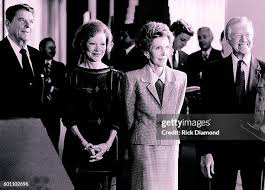
Introduction: Ronald Reagan’s Importance
Ronald Reagan, the 40th President of the United States, served from 1981 to 1989 and is often credited with reshaping American politics and culture during the latter half of the 20th century. His transformative policies and charismatic leadership style continue to resonate today, making understanding his legacy essential for comprehending modern American history.
Revolutionizing Economic Policies
One of the cornerstones of Reagan’s presidency was his approach to economic policy, famously known as ‘Reaganomics.’ This set of policies advocated for tax cuts, deregulation, and controlling the money supply to combat inflation. Proponents argue that these measures spurred economic growth and led to the creation of millions of jobs. Critics, however, claim that the benefits were not equally distributed and increased the national debt.
Foreign Policy and the End of the Cold War
Reagan’s foreign policy was marked by a staunch opposition to communism, notably evidenced by his strong rhetoric against the Soviet Union. He famously called it an ‘evil empire’ and pushed for a significant military buildup. However, his strategy also included diplomatic visits and arms control treaties, which contributed to the eventual dissolution of the Soviet Union in 1991. The 1987 Intermediate-Range Nuclear Forces Treaty (INF) is often highlighted as a significant achievement of his administration.
Social Policies and Cultural Influence
On the domestic front, Reagan’s presidency was characterized by a conservative agenda that included a strong focus on family values, a tough stance on crime, and a commitment to reducing the size of government. His administration faced challenges such as the AIDS crisis, which he was criticized for not addressing effectively in its early stages. Nonetheless, his optimistic vision of America helped to uplift national spirit during economic downturns.
Conclusion: The Significance of Reagan’s Legacy
Ronald Reagan’s legacy remains a subject of heated debate. His supporters view him as a transformative leader who championed freedom and revitalized the American economy, while critics argue that his policies fostered inequality and exacerbated social issues. As the nation continues to grapple with the values and policies he championed, studying Reagan’s presidency offers essential insights into the complexities of American political life and the ongoing impact of his leadership on contemporary society.