Introduction
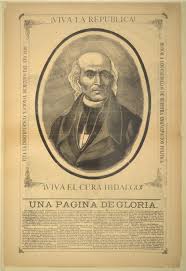
Miguel Hidalgo y Costilla, a Roman Catholic priest and revolutionary leader, is widely recognized as the Father of Mexican Independence. His significant role in leading the revolt against Spanish colonial rule in the early 19th century remains a vital part of Mexico’s national identity. His actions not only sparked a long struggle for freedom that culminated in Mexico’s independence in 1821 but also set the stage for social reform in the nation. Understanding Hidalgo’s legacy is essential in examining Mexico’s history and its ongoing quest for equality and justice.
The Road to Revolution
Born on May 8, 1753, in Pénjamo, Guanajuato, Hidalgo’s early life was marked by a rigorous education and a deep commitment to social justice. His exposure to Enlightenment ideas began to shape his worldview, leading him to advocate for the rights of the oppressed and the indigenous peoples. By the early 1800s, discontent began to brew within Mexico due to oppressive taxes, racial inequality, and a lack of political representation.
On September 16, 1810, Hidalgo issued the “Grito de Dolores” from the pulpit of his parish in Dolores, igniting a revolution that called for the end of Spanish rule, the redistribution of land, and greater rights for the indigenous populations. This call to arms marked the beginning of a decade-long struggle for independence.
Key Events and Impact
Under Hidalgo’s leadership, a large and diverse revolutionary army formed, composed of mestizos, indigenous people, and other disenchanted Mexicans. Initial successes included the capture of key cities like Guanajuato and Guadalajara. However, the movement suffered setbacks, and Hidalgo was ultimately captured and executed by Spanish forces in 1811.
Despite his death, Hidalgo’s vision for a free and just Mexico continued to inspire subsequent leaders, such as José María Morelos and Vicente Guerrero, who carried on the fight until independence was achieved in 1821. His life and sacrifice are commemorated annually in Mexico on September 16, which is recognized as Independence Day.
Conclusion
Miguel Hidalgo’s legacy as a revolutionary icon remains deeply ingrained in Mexican culture and identity. His commitment to social justice and equality laid the groundwork for future reforms and inspired generations of Mexicans to seek freedom from oppression.
Today, as Mexico continues to confront challenges related to inequality and social justice, Hidalgo’s ideals resonate profoundly. Understanding the complexities of his life and the historical context of his actions is crucial for appreciating not only Mexico’s past but also its ongoing journey towards equity and liberation.