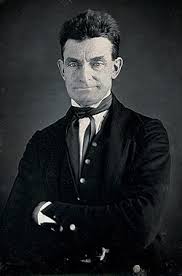
Introduction
The name John Brown resonates in American history as a symbol of the struggle against slavery and a fervent advocate for social justice. Brown’s life and actions, particularly his raid on Harpers Ferry, have sparked discussions regarding morality, activism, and the lengths to which one must go for justice. Understanding Brown’s complex legacy is crucial in today’s society, as we continue to grapple with issues of inequality and civil rights.
Early Life and Influences
Born on May 9, 1800, in Torrington, Connecticut, John Brown grew up in a deeply religious family with strong abolitionist beliefs. His father, Owen Brown, was a staunch enemy of slavery, which greatly influenced John’s worldview. Moving around various states as a young man, Brown witnessed the injustices faced by African Americans firsthand, further cultivating his commitment to fighting slavery.
The Raid on Harpers Ferry
Brown’s most infamous act occurred in October 1859 when he led a raid on the federal armory at Harpers Ferry, Virginia (now West Virginia). Brown envisioned this as a major assault to incite an armed slave revolt that would ultimately lead to the end of slavery in America. Armed with a small group of followers, Brown captured the armory but was quickly surrounded by federal troops led by Colonel Robert E. Lee. After a two-day standoff, Brown was captured, tried, and sentenced to death for treason against Virginia.
Impact and Legacy
Despite his execution on December 2, 1859, John Brown’s actions contributed to the rising tensions leading to the Civil War. Many abolitionists viewed him as a martyr, while opponents vilified him as a terrorist. His raid galvanized both sides in the national debate over slavery and set the stage for a conflict that would erupt just a few years later. Today, scholars recognize Brown as a complex character—both a fanatic and a visionary, whose commitment to justice forced the United States to confront its moral and ethical dilemmas regarding slavery.
Conclusion
John Brown’s legacy persists in contemporary dialogues about justice, equality, and civil rights. His radical approach invites reflection on the role of activism in enacting change. While his methods may not align with modern perspectives, the passion with which he pursued his cause continues to inspire movements aimed at combating injustice. As we navigate the challenges of today’s society, the story of John Brown reminds us of the enduring fight for equality and serves as a call to action for those who wish to make a difference.