Introduction
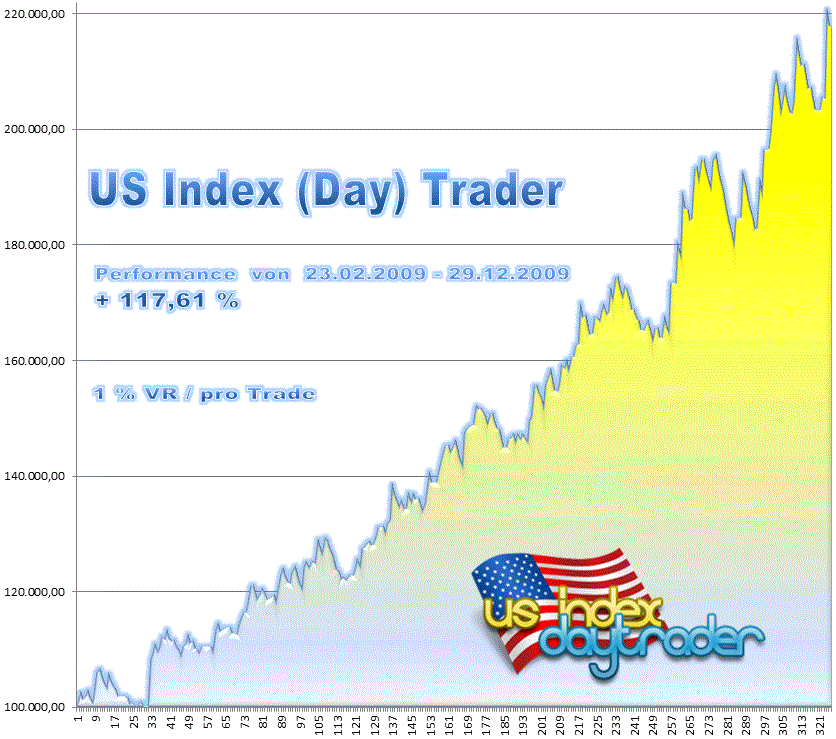
The phenomenon of day trading has gained considerable attention in recent years, particularly with the rise of technology and self-directed trading platforms. As financial markets continue to evolve, day traders play a crucial role by contributing to market liquidity and influencing price movements. Understanding the current trends in day trading is vital for investors, policymakers, and anyone interested in the financial markets.
Current Trends in Day Trading
Day trading involves buying and selling financial instruments within the same trading day, often making numerous trades to capitalize on small price movements. According to a recent report from the Financial Industry Regulatory Authority (FINRA), the number of active retail day traders has surged by 60% over the past year alone. This surge has been largely attributed to the COVID-19 pandemic, which led to an influx of individual investors entering the market.
Platforms such as Robinhood and Webull have simplified the trading process, making it accessible to a broader audience. Data from Bloomberg shows that in 2023, retail trading accounted for over 25% of total trading volume on U.S. exchanges, a noticeable increase from previous years. The introduction of commission-free trading and user-friendly interfaces are notable factors contributing to this rise.
Risks and Rewards for Day Traders
However, day trading is not without its challenges and risks. Studies indicate that more than 90% of day traders lose money over time. The volatility of financial markets can lead to significant financial losses if traders do not employ effective risk management strategies. Recent analyses also suggest that traders are increasingly using leverage, which magnifies both potential gains and losses.
The recent market fluctuations, notably in tech stocks and cryptocurrencies, have created both opportunities and risks for day traders. Influential events, such as interest rate changes and geopolitical tensions, impact market volatility and influence the success of day trading strategies.
Conclusion
As we look to the future, the landscape for day traders appears to be evolving with technological advancements and changes in market dynamics. Institutions and retail traders must navigate an increasingly complex environment. Understanding the risks, adopting disciplined strategies, and remaining aware of market conditions will be paramount for success. For those contemplating entering the world of day trading, it is crucial to approach with caution, informed by awareness of both the potential rewards and significant risks involved.