Introduction
The Civil Rights Act of 1964 remains one of the most significant pieces of legislation in American history. Enacted during a tumultuous era of racial and social unrest, this Act was pivotal in dismantling systemic discrimination and ensuring equal rights for all citizens, irrespective of race, color, religion, sex, or national origin. As the United States reflects on its continued efforts towards equality and justice, the Civil Rights Act stands as a symbol of progress and ongoing challenges.
Main Body
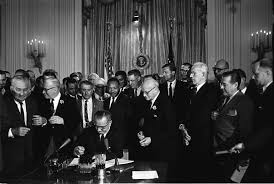
The Civil Rights Act was signed into law by President Lyndon B. Johnson on July 2, 1964, following a fervent movement for civil rights that surged through the 1950s and early 1960s. The Act specifically addressed issues of discrimination in various areas including employment, education, and public accommodations. Title II prohibited discrimination in public places, while Title VII outlawed employment discrimination in businesses with 15 or more employees.
In the years following its enactment, the Act has proven instrumental in advancing civil rights. The establishment of the Equal Employment Opportunity Commission (EEOC) allowed for the enforcement of federal protections against workplace discrimination. The Act has been cited in various landmark Supreme Court cases that underscored its importance. For instance, in 1971, the Court recognized that the Act provided a basis for affirmative action policies that aimed to rectify historic discrimination.
Despite its significant achievements, the impact of the Civil Rights Act is still felt today, amid ongoing debates about racial inequality, voter suppression, and discrimination. In recent years, activists have called for further reforms to address persisting issues, such as police violence against marginalized communities, indicating that the struggle for civil rights continues.
Conclusion
As we look back on the Civil Rights Act of 1964, it’s crucial to recognize both its historic achievements and the work that remains. This landmark law laid the groundwork for subsequent legislation and movements aimed at achieving true equality. Looking ahead, the importance of continuing to fight for civil rights becomes evident as society grapples with evolving issues related to race and equality. The legacy of the Civil Rights Act is a poignant reminder of the power of collective action and the enduring pursuit of justice for all.