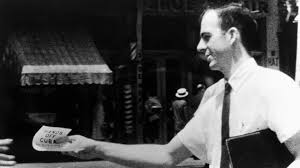
Introduction
Lee Harvey Oswald remains one of the most infamous figures in American history, known primarily for his role in the assassination of President John F. Kennedy on November 22, 1963. The significance of Oswald’s actions has left a profound impact on the American political landscape and public perception of conspiracy theories related to the assassination. As the 60th anniversary of the tragic event approaches, renewed interest in Oswald’s life and motivations prompts discussions about his role and the implications for American society.
Life Before the Assassination
Lee Harvey Oswald was born on October 18, 1939, in New Orleans, Louisiana. He led a tumultuous early life, marked by the death of his father and a troubled upbringing. Oswald served in the U.S. Marine Corps, where he developed an interest in Marxist ideology, eventually leading him to defect to the Soviet Union in 1959. His time in the USSR was brief but influential, as he returned to the United States in 1962 with a growing belief in socialist principles.
The Assassination of John F. Kennedy
On the fateful day of November 22, 1963, President Kennedy was assassinated while traveling in a motorcade through Dallas, Texas. Oswald was arrested within hours of the shooting, accused of killing Kennedy and a Dallas police officer. He denied the charges and claimed that he was a ‘patsy.’ The Warren Commission, established to investigate the assassination, concluded that Oswald acted alone, a finding that has been the subject of widespread debate and skepticism over the years.
Legacy and Conspiracy Theories
Oswald was killed two days after his arrest by nightclub owner Jack Ruby, sparking numerous conspiracy theories regarding not only his actions but also potential motives and accomplices. Scholars and historians have studied his life extensively, exploring his psychological makeup and the political climate of the time, which contributes to ongoing interest in the case. Various films, books, and documentaries have examined Oswald’s influence, further complicating the narrative surrounding the assassination.
Conclusion
Lee Harvey Oswald’s life and actions continue to spark fascination and controversy as the nation reflects on the assassination of President John F. Kennedy. With a complex legacy intertwined with questions of conspiracy and political justice, Oswald remains a crucial figure for understanding the cultural and historical ramifications of this pivotal event. As new generations explore the circumstances surrounding JFK’s assassination, it is essential to examine Oswald’s role not only in the past but also how it shapes with present narratives about truth, responsibility, and political transparency.