Introduction
On-base Plus Slugging (OPS) has become a key statistic in baseball, crucial for analyzing player performance. With the game evolving, traditional metrics such as batting average are increasingly complemented by advanced statistics like OPS. This metric combines two critical aspects of offensive play: on-base percentage (OBP) and slugging percentage (SLG). As teams seek the most effective ways to evaluate their players, understanding OPS is essential for fans and analysts alike.
What is OPS?
OPS is calculated by adding a player’s on-base percentage and slugging percentage:
OPS = OBP + SLG.
On-base percentage reflects how often a player reaches base, while slugging percentage measures the power-hitting ability of the player. By combining these two statistics, OPS provides a more comprehensive view of a player’s offensive contributions than traditional metrics alone.
Recent Trends in OPS in Major League Baseball
In 2023, the significance of OPS continues to grow as teams increasingly rely on data analytics to construct winning lineups. The league has seen a surge in power hitters, leading to a notable increase in overall OPS scores league-wide. For instance, in the 2023 season so far, the average OPS across Major League Baseball has climbed to 0.740, a reflection of the growing trend toward power hitting and selective plate appearances.
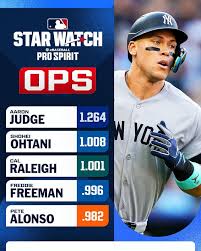
Additionally, players like Shohei Ohtani and Aaron Judge have consistently posted high OPS numbers, cementing their reputations as offensive juggernauts. Ohtani, a two-way player, has not only excelled as a pitcher but has also maintained an OPS exceeding .950 during this season, highlighting the dual-threat capability he brings to the game.
Why OPS Matters
OPS serves as a valuable tool for teams in evaluating players when making decisions about trades, free agency, and roster construction. It helps to identify players who contribute significantly to run production, allowing franchises to maximize their offensive potential. Moreover, for fans and analysts, OPS provides a clearer picture of a player’s impact than standard metrics, aligning with modern baseball’s focus on efficiency and run generation.
Conclusion
As baseball continues to evolve, metrics like OPS play a crucial role in shaping the future of the sport. Understanding OPS not only enhances the appreciation of the game but also provides fans with a way to engage more deeply with team strategies and player evaluations. With its focus on on-base and power hitting, OPS is here to stay, representing a significant development in the analytics of baseball and influencing decision-making at all levels of the game.