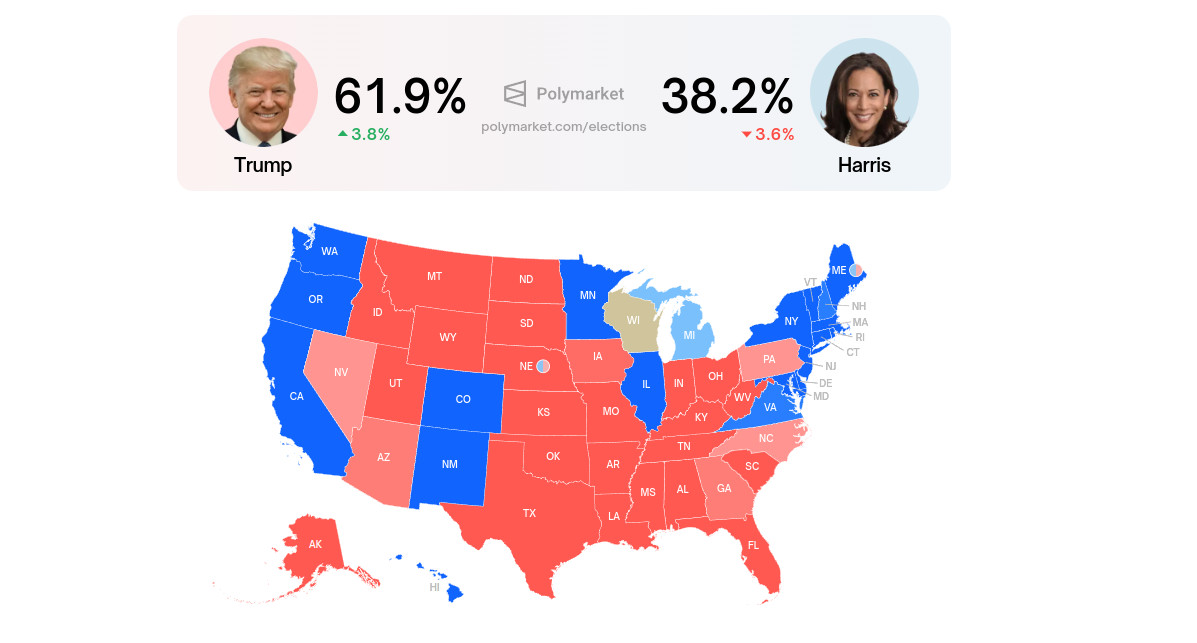
Introduction to Polymarket
Polymarket is quickly becoming a vital player in the world of prediction markets. These markets allow individuals to wager on the outcomes of future events, providing insights that statistics alone often cannot deliver. As the popularity of decentralized finance (DeFi) evolves, Polymarket emerges as a significant innovation, attracting interest from traders, analysts, and enthusiasts alike. Its relevance is magnified by the increasing ability of individuals to forecast events ranging from elections to sports outcomes and beyond, marking it as a space worthy of attention.
The Mechanics of Polymarket
Launched in 2020, Polymarket operates on the Ethereum blockchain, enabling users to trade on various propositions by buying shares that represent the likelihood of an event occurring. For instance, users may bet on outcomes like ‘Will the Federal Reserve raise interest rates this year?’ Each proposition is structured as a market, where the price of shares reflects current expectations, essentially functioning as a live indicator of public sentiment.
Polymarket’s platform is built on smart contracts, ensuring transparency and security in each transaction. This decentralized structure eliminates the need for intermediaries, reducing fees and enhancing user autonomy. Traders can cash out anytime, leading to a dynamic trading environment that reacts to global events and news.
Recent Developments and Impact
Recently, Polymarket has gained attention for its role in important global events. During the 2022 U.S. midterm elections, for example, the platform facilitated predictions that closely mirrored actual outcomes, showcasing its potential as a reliable source of public opinion. Analysts noted that while traditional polling methods struggle with accuracy, prediction markets like Polymarket provide real-time adjustments based on market sentiment.
In addition, Polymarket faced scrutiny regarding regulatory challenges from financial authorities. The platform has made efforts to comply with applicable laws while stressing its commitment to user privacy and the decentralized ethos. This landscape highlights the ongoing tension between innovation and regulation within the cryptocurrency and trading sectors.
Conclusion and Future Outlook
As Polymarket continues to evolve, its significance in both the financial and prediction market sectors cannot be understated. Its user-friendly interface, alongside the appeal of decentralized trading, positions it for future growth. Moreover, predictions on political events, social trends, and economic indicators are likely to draw more users seeking to leverage their insights.
In conclusion, the developments at Polymarket signal a shift in how predictions are made and valued. As discussions around regulation progress, the community’s response will be critical in steering the platform’s future. For traders and analysts, understanding Polymarket presents a unique opportunity to engage with an emerging financial landscape that could redefine forecasting across various sectors.