Introduction
The Sudan Civil War, reignited in April 2023, represents a significant humanitarian crisis with global implications. Its roots lie deep in the historical tensions that have plagued Sudan for decades, encompassing ethnic strife, political instability, and economic struggles. The conflict has ramifications not only for Sudan but also for neighboring countries and international relations, making it a critical topic of discussion within global discourse.
Background of the Conflict
The current civil war primarily features two main factions: the Sudanese Armed Forces (SAF) led by General Abdel Fattah al-Burhan, and the Rapid Support Forces (RSF) commanded by General Mohamed Hamdan Dagalo. This escalation followed years of political unrest and a brief transition to democratic rule after the ousting of long-time leader Omar al-Bashir in 2019.
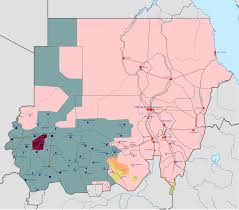
The immediate trigger for hostilities was a power struggle between the SAF and RSF, which evolved into widespread violence, forcing millions to flee. The fighting has predominantly concentrated in the capital, Khartoum, and various regions, resulting in severe humanitarian consequences, including food shortages and medical crises.
Recent Developments
According to reports from the United Nations, over 2 million people have been displaced, with more than 600,000 seeking refuge in neighboring countries, such as Chad and South Sudan. As of October 2023, ceasefire attempts have largely failed, with civilians caught in crossfire as armed groups compete for territory and resources. Furthermore, the conflict has worsened existing ethnic tensions and exacerbated the country’s longstanding economic problems.
International response has been varied; while the African Union and Arab League have called for dialogue, major world powers have imposed sanctions on key military leaders involved in the conflict. UN Secretary-General António Guterres has emphasized the need for a comprehensive peace framework to address the underlying issues driving violence in Sudan.
Conclusion and Future Implications
The Sudan Civil War highlights the fragile state of democracy and governance in a region marked by strife. As the conflict continues, the potential for a broader regional crisis grows, with implications for human rights and security. The international community’s role remains crucial in facilitating peace talks and providing humanitarian aid to those affected. For readers, staying informed about these developments is essential, as the outcomes of the Sudan Civil War may substantially impact global geopolitical dynamics and humanitarian efforts in the years to come.