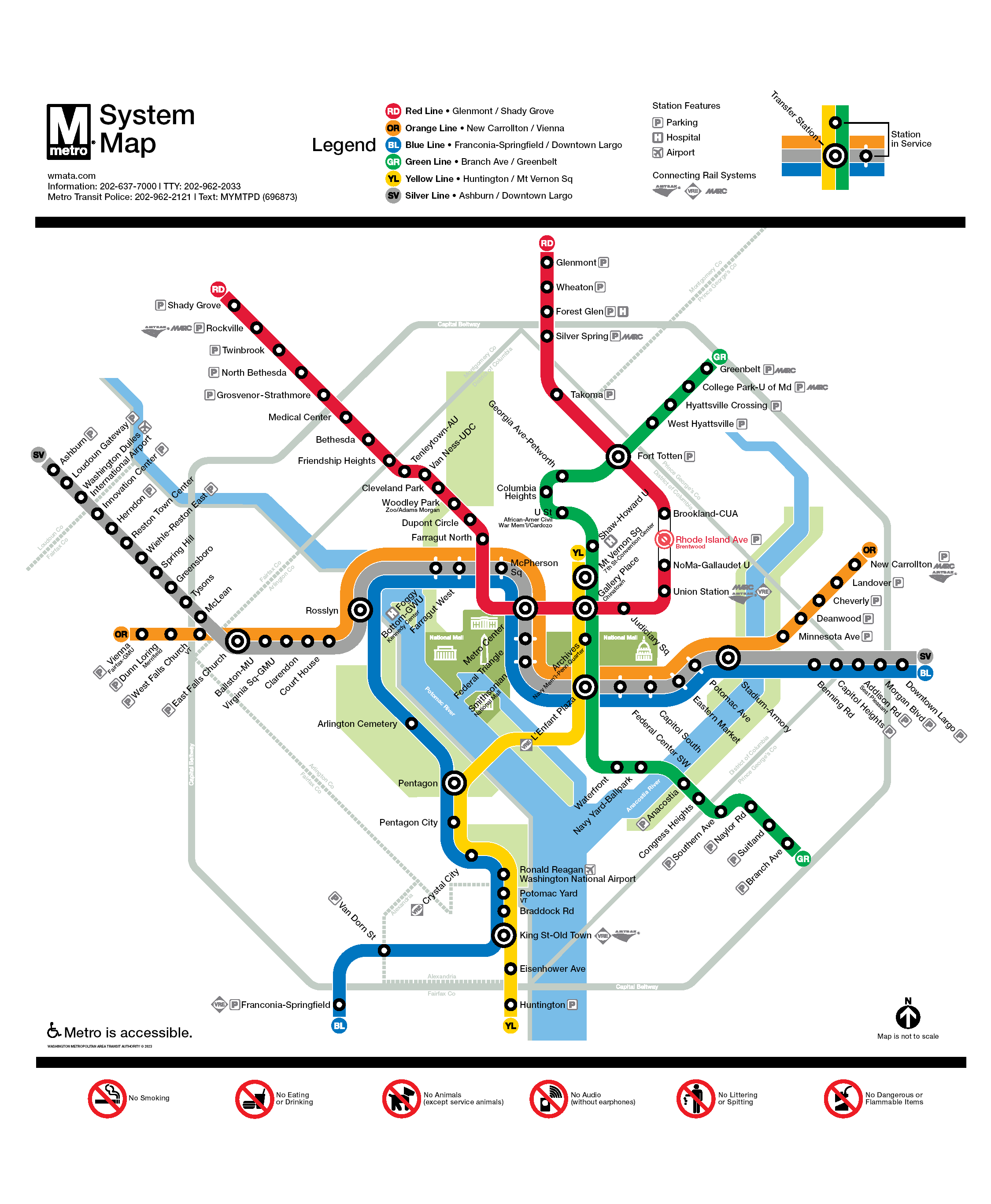
Introduction to WMATA
The Washington Metropolitan Area Transit Authority (WMATA) plays a crucial role in providing public transportation for the D.C. metropolitan area. Established in 1967, WMATA operates the Washington Metro and Metrobus systems, which facilitate daily travel for thousands of residents and visitors. Understanding WMATA’s operations is essential due to the significant impact it has on the region’s economy, environment, and overall mobility.
The Operations of WMATA
WMATA operates a robust system comprising six Metro rail lines and over 300 bus routes. The Metro rail system serves Virginia, Maryland, and the District of Columbia, connecting key locations such as government buildings, cultural landmarks, and commercial areas. In 2022, WMATA reported an average weekday ridership of approximately 500,000 passengers, demonstrating its importance as a vital transit option.
Despite facing challenges, such as funding issues and the need for system upgrades, WMATA continues to work on several initiatives aimed at improving service efficiency. During the COVID-19 pandemic, the agency adapted its services to encourage safe travel, including enhancing sanitation measures and promoting contactless payment methods.
Recent Developments and Challenges
In recent months, WMATA has announced plans for expanding its services. The agency is looking to improve accessibility by adding new elevators and escalators in key stations, thus catering to individuals with disabilities. Additionally, a focus on sustainability has led to a commitment to electrifying its bus fleet by 2040, contributing to broader environmental goals.
However, challenges remain. Funding for WMATA has been a recurring issue, as the agency relies heavily on subsidies from local jurisdictions. Budget constraints have impacted service levels and maintenance schedules, raising concerns about the long-term viability of the system.
Conclusion: The Future of WMATA
As WMATA continues to navigate modernization efforts and service expansions, its role remains critical in shaping urban mobility in Washington D.C. and surrounding areas. Future investments in infrastructure and technology will be imperative to meet the needs of a growing population and to encourage more residents to choose public transit over private vehicles.
For readers, staying informed about WMATA’s developments is essential not only for daily commuting but also for understanding how local policies impact transportation options. As cities continue to evolve, the success of WMATA will profoundly affect traffic congestion, environmental sustainability, and economic growth in the region.