Introduction
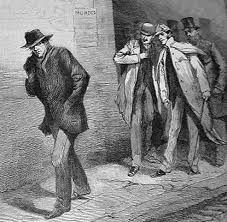
Jack the Ripper remains one of history’s most notorious serial killers, captivating the public’s imagination for over a century. Active in London’s Whitechapel district in 1888, this unidentified assailant committed a series of gruesome murders that have since sparked endless debate and speculation about their motive and identity. The ongoing fascination with Jack the Ripper not only highlights societal issues of the Victorian era but also serves as a poignant reminder of the challenges of law enforcement even in modern times.
The Murders
Between August and November 1888, five women, including Mary Ann Nichols, Annie Chapman, Elizabeth Stride, Catherine Eddowes, and Mary Jane Kelly, were brutally murdered. Early reports indicated that the victims were involved in prostitution, which framed public perception of the murders. Each crime scene exhibited shocking levels of violence; the victims were often subjected to deep throat slashes and abdominal mutilations. The lack of forensic technology at the time meant that crucial evidence was lost or went unexamined, complicating the investigation significantly.
The Investigation
The police response was fraught with challenges. The Metropolitan Police’s methods were hampered by a lack of resources and public pressure nearly drove them to desperation. Various letters, including one purportedly from the killer himself signed as ‘Jack the Ripper,’ intensified media frenzy. The investigation prompted heightened scrutiny of social conditions in the East End, touching on themes of poverty, gender, and class in Victorian London.
Legacy and Speculation
The identity of Jack the Ripper has been the subject of substantial speculation. Over the years, numerous theories have emerged, positing suspects from local butchers to members of the royal family. Each theory presents varying degrees of circumstantial evidence, but no definitive conclusion has been reached. In 2023, a new genetic analysis sparked renewed interest in the case, hinting at possible identification but ultimately failing to provide conclusive proof.
Conclusion
Jack the Ripper’s legacy endures, both as a symbol of historical criminology and as a lens through which we can explore the darker facets of human nature and society. As modern forensic science evolves, there remains hope that the mystery may one day be unraveled. For many, the allure of understanding Jack the Ripper is more than an obsession; it is an exploration of humanity’s capacity for both good and evil, resonating in a contemporary context where justice for the past often feels just out of reach.