Introduction
The 25th Amendment to the United States Constitution plays a crucial role in outlining the procedures for presidential succession and dealing with presidential incapacity. Ratified in 1967, this amendment is essential for maintaining the stability and continuity of the executive branch, especially during times of crisis. Understanding the 25th Amendment is increasingly relevant in today’s political landscape, where discussions about presidential fitness and succession have come to the forefront.
Key Provisions of the 25th Amendment
The 25th Amendment consists of four sections that address different scenarios related to presidential incapacity and succession:
- Section 1: This section clarifies that if the president is removed from office, resigns, or dies, the vice president shall succeed to the presidency.
- Section 2: This section establishes the procedure for filling a vacancy in the office of the vice president. It allows the president to nominate a new vice president who must then be confirmed by a majority vote of both houses of Congress.
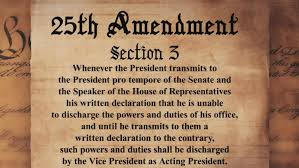
- Section 3: This section provides a mechanism for the president to voluntarily transfer power to the vice president when they are unable to perform their duties, such as during surgery or medical procedures. The president must inform Congress of this transfer.
- Section 4: This controversial section allows for the vice president and a majority of the cabinet to declare the president unfit to discharge the powers and duties of the office. Congress must be notified, and if the president contests this decision, Congress has the authority to ultimately decide the outcome.
Significance and Recent Discussions
The 25th Amendment gained renewed attention during recent presidential administrations, particularly concerning discussions about the physical and mental fitness of presidents to serve. Critics and supporters contemplate its application, especially Section 4, which has never been fully invoked since its ratification. Legal experts argue that while it provides a safeguard for democracy, misusing or politicizing it could lead to further divisions in an already polarized political environment.
Conclusion
In conclusion, the 25th Amendment remains a vital component of the U.S. Constitution aimed at ensuring the stability and continuity of the presidency. The discussions surrounding its interpretation highlight its importance in modern governance. As political landscapes evolve, the amendment’s role in addressing potential crises will likely continue to be a topic of significant legal and public interest.