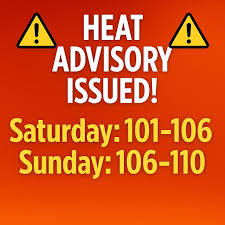
The Importance of Heat Advisories
As temperatures rise across the United States, heat advisories have become an essential tool for public safety. Issued by the National Weather Service (NWS), these advisories alert residents to increased risks of heat-related illnesses, especially for vulnerable populations such as the elderly, children, and those with pre-existing health conditions. Understanding these advisories is crucial in taking necessary precautions to stay safe.
What is a Heat Advisory?
A heat advisory is issued when the forecasted high temperature is expected to be 100 degrees Fahrenheit or higher, or when the heat index—an index that combines air temperature and humidity to represent discomfort due to heat—is expected to reach or exceed 105 degrees for at least two consecutive days. In regions experiencing high humidity, the risks escalate, making safety measures vital.
Effects of Extreme Heat
Exposure to extreme heat can lead to serious health issues such as heat exhaustion and heatstroke. Symptoms of heat exhaustion include heavy sweating, weakness, dizziness, and nausea, while heatstroke can cause high body temperatures, confusion, and even loss of consciousness. According to the Centers for Disease Control and Prevention (CDC), over 600 people die from extreme heat each year in the U.S., highlighting the importance of being informed and prepared.
Current Trends and Events
As of mid-August 2023, many parts of the United States are under heat advisories due to a persistent heatwave, with temperatures soaring above average levels. For instance, areas in the Southwest and Southeastern states are facing highs above 110 degrees Fahrenheit. Local authorities are urging residents to avoid outdoor activities during peak heat hours, stay hydrated, and be mindful of signs of heat-related illnesses. In addition, city services are activating cooling centers for those who need relief from the heat.
Safety Tips During a Heat Advisory
During a heat advisory, it is crucial to follow safety recommendations:
- Stay indoors during peak sun hours, typically between 10 AM and 4 PM.
- Stay hydrated by drinking plenty of water. Avoid alcohol and caffeine, which can lead to dehydration.
- Wear lightweight, loose-fitting clothing and light-colored clothes to reflect, rather than absorb, heat.
- Check on family, friends, and neighbors who may be more vulnerable to heat effects.
Conclusion
Heat advisories serve as critical warnings that can help save lives during periods of extreme heat. Understanding their significance and taking proactive measures can significantly lessen the risks associated with excessive temperatures. As climate conditions continue to evolve, it is likely that heat advisories will become more frequent, making awareness and preparedness even more vital for community health and safety.