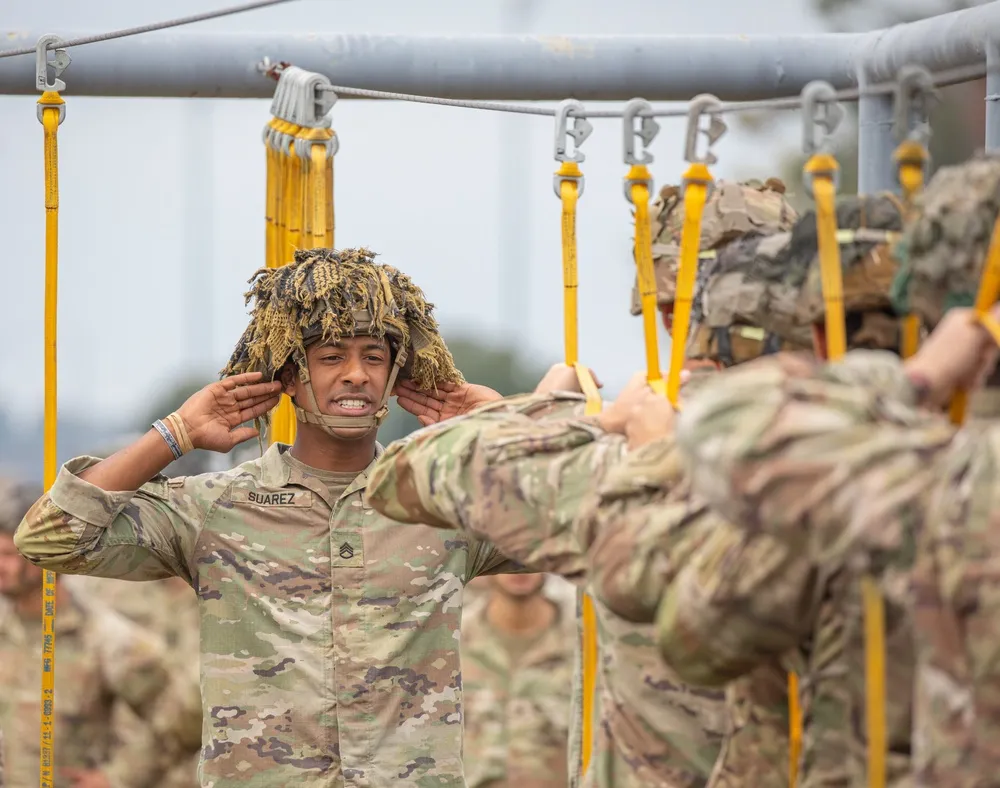
The 82nd Airborne Division, known for its rapid response capabilities, has been a cornerstone of U.S. military readiness. Historically, the division has maintained a brigade of approximately 3,000 soldiers on standby, prepared to deploy globally within a day. However, as the war with Iran extends into its fourth week, expectations have shifted dramatically.
Recent developments indicate that members of the leadership team of the 82nd Airborne Division, including the commanding general and his headquarters staff, are being sent to the Middle East. The Pentagon has confirmed that fewer than 1,500 troops from the division will be deployed, marking a significant escalation in U.S. military involvement in the region.
This deployment comes on the heels of over 9,000 combat flights conducted by U.S. forces, which have targeted more than 9,000 military objectives in Iran. The urgency of the situation is underscored by the fact that thousands of Marines are already en route to the Middle East, further amplifying the U.S. military presence.
Experts suggest that the deployment of the 82nd Airborne Division could be a strategic move to bolster U.S. forces in response to the ongoing conflict. President Trump remarked, “The other side, I can tell you, they’d like to make a deal,” indicating a potential shift in diplomatic efforts amidst military actions.
Despite the urgency, uncertainties remain. It is unclear what specific role the additional paratroopers might play if they are sent, and the exact timing and details of the deployment of a brigade combat team from the 82nd Airborne Division are not confirmed. Details remain unconfirmed.
As the situation evolves, the 82nd Airborne Division’s involvement will be closely monitored, reflecting the broader implications of U.S. military strategy in the Middle East. The division’s readiness and rapid deployment capabilities will be critical as tensions continue to rise.