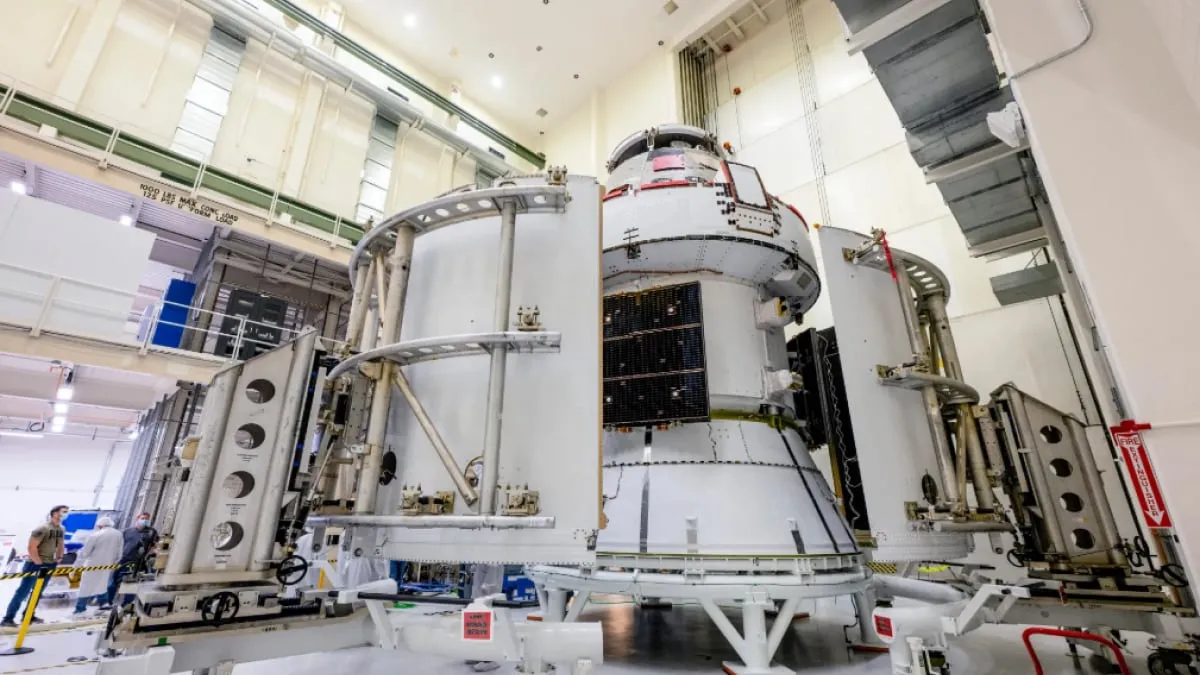
The Artemis 2 mission is poised to conclude with a historic splashdown in the Pacific Ocean off the coast of San Diego, California, at 8:07 p.m. ET. This event marks a significant milestone for NASA as it prepares for future lunar exploration missions.
During re-entry, the spacecraft will reach speeds nearing 40,000 km/h and temperatures soaring to approximately 3,000 C. The astronauts aboard, including Victor Glover, Christina Koch, Jeremy Hansen, and Reid Wiseman, will experience nearly 4 Gs as they return to Earth, a testament to the intense conditions of space travel.
The re-entry sequence is expected to last about 14 minutes, during which two drogue parachutes will deploy at 22,000 feet (6,705 m) and three main parachutes at 1,800 metres, ensuring a controlled descent. The recovery operation will be executed by the USS John P. Murtha, which is prepared to assist the astronauts immediately upon splashdown.
Victor Glover expressed the profound nature of the experience, stating, “Riding a fireball through the atmosphere is profound, as well. I’m gonna be thinking about and talking about all of these things for the rest of my life.” This sentiment reflects the excitement and significance of the mission for the crew.
After splashdown, the astronauts will be helped from their seats to a large inflatable raft referred to as the “front porch”. Liliana Villarreal detailed the recovery process, explaining that once all four astronauts are on the raft, they will be towed away from the capsule, with two helicopters rotating to pick them up within minutes.
The Artemis II mission follows the uncrewed Artemis I mission, which laid the groundwork for this crewed endeavor. NASA has also modified re-entry procedures based on findings from Artemis I to enhance safety and effectiveness.
As the mission approaches its conclusion, the anticipation builds for the astronauts’ return to the Johnson Space Center in Houston for medical evaluations. The successful landing will not only validate NASA’s advancements in re-entry technology but also pave the way for future missions aimed at returning humans to the Moon.
Details remain unconfirmed regarding the exact timing of recovery operations and any immediate post-landing activities. The world watches closely as NASA continues to push the boundaries of space exploration.