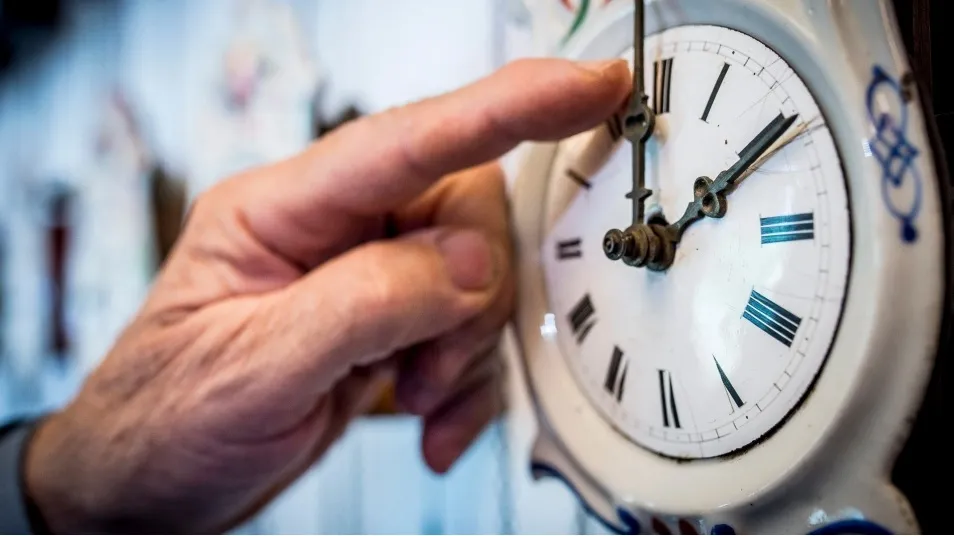
This Sunday will be the last occasion for the time shift in British Columbia.
People and companies will have a period of eight months to get ready for the removal of the upcoming time change, which was initially set for November 1.
Permanent Time Change Benefits
Removing the biannual clock changes minimizes disruptions for families, streamlines planning, and offers an additional hour of evening daylight during the winter months.
The Province is implementing a permanent, year-round daylight saving time (DST) to enhance public health, minimize family disruptions, streamline scheduling, and offer an additional hour of evening light throughout the winter season.
Premier David Eby stated, "This choice goes beyond just adjusting clocks. It aims to simplify life for families, minimize disruptions for businesses, and foster a stable, prosperous economy. I am optimistic that our American counterparts will soon follow suit in eliminating these disruptive time shifts."
Impact on Families
At that moment, the shift to "Pacific Time"—the designation for B.C.'s updated time zone—will be finalized.
The Pacific Time Zone will be adjusted to seven hours behind Coordinated Universal Time (UTC-7), aligning with the current offset observed during daylight saving time.
"The vast majority of individuals in B.C. have expressed a desire to put an end to the constant changes associated with seasonal time adjustments." remarked Niki Sharma, Attorney General.
Government’s Decision Explained
"This change provides enhanced stability, promotes public health, and minimizes the biannual, avoidable interruptions to the routines of parents, children, shift workers, small businesses, and pet owners."
Reasons why permanent daylight savings time is beneficial for British Columbia.
During the summer of 2019, the Province held a public consultation regarding timekeeping, which attracted an unprecedented 223,000 participants, with 93% in favor of implementing year-round daylight savings time.
Future of Daylight Hours
In a similar vein, support for the observance of year-round daylight savings time was above 90% across nearly all industry and occupational categories.
The government plans to collaborate with organizations, small enterprises, and public-sector allies from March to November 2026 to facilitate a seamless and well-organized shift to permanent daylight savings time.
Areas that follow Mountain Time
A few communities in the eastern regions of B.C. follow a variant of Mountain Time rather than adhering to Pacific Time.
The alterations will not affect those areas.
As Pacific Time will no longer shift twice annually, numerous communities will find themselves more in sync with the rest of British Columbia.
Neighboring states such as Washington, Oregon, and California are currently working on developing or implementing comparable laws.