“Our study shows that giant invertebrates — octopuses — were also part of the top predator community,” said Yasuhiro Iba, a leading researcher on the recent findings.
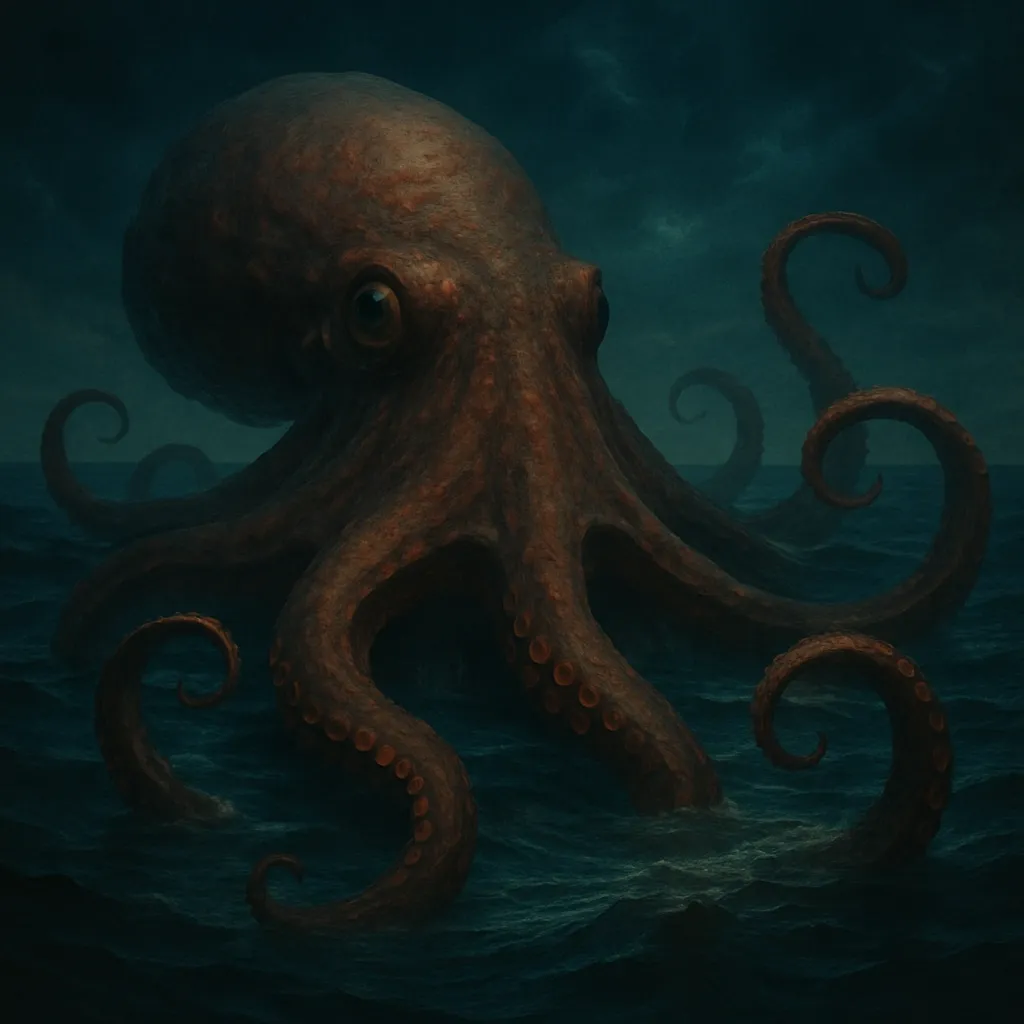
Giant octopuses prowled the seas during the Age of Dinosaurs. Some species reached up to 19 metres in length. The research indicates these massive creatures played a significant role in the Cretaceous marine food web.
The fossils of these ancient octopuses were identified as beaks or jaws found in rock formations on Vancouver Island, B.C., and Hokkaido, Japan. These fossils date back between 100 million and 72 million years ago.
Notably, Nanaimotethis haggarti may have been among the largest invertebrates in Earth’s history. It was discovered to have a beak larger than that of the modern giant squid, which measures about 12 metres.
Distinct wear patterns on the fossilized beaks suggest they routinely crushed hard bones and shells. This indicates that these animals were not only powerful but also behaviorally sophisticated predators.
Dr. Thomas Clements remarked, “To see a beak this size is quite amazing, to be honest. It was a massive animal.” The study relied on detailed analysis of fossilized beaks—the only rigid part of an octopus’s body.
The findings are published in the journal Science. They provide new insights into octopus evolution and highlight their predatory nature alongside other marine reptiles like mosasaurs and plesiosaurs.
Yet, how exactly these giant octopuses evolved remains largely a mystery due to the scarcity of their fossils. Further research is expected to shed light on this enigmatic aspect of marine history.