Introduction
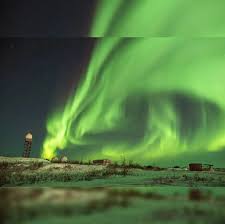
The aurora borealis, more commonly known as the northern lights, is a breathtaking natural phenomenon that captivates observers in polar regions. Recently, a geomagnetic storm hit Earth, significantly enhancing the visibility and activity of the aurora borealis. This event, resulting from disturbances in the Earth’s magnetic field, has not only provided remarkable visuals but also has essential implications for satellite operations, telecommunications, and climate research.
Details of the Geomagnetic Storm
On October 14, 2023, scientists reported a significant geomagnetic storm categorized as an S4 on the space weather scale, triggered by a coronal mass ejection (CME) from the sun that occurred days prior. This CME released a massive cloud of solar plasma and magnetic fields into space, traveling directly towards Earth. As it collided with the Earth’s magnetic field, it induced currents that caused vibrant auroras visible as far south as Illinois and Pennsylvania, where typical sightings are uncommon.
The National Oceanic and Atmospheric Administration (NOAA) and the Space Weather Prediction Center (SWPC) provided frequent updates, informing the public of best viewing times and locations. Enthusiasts and curious onlookers flocked to areas renowned for their dark skies to catch a glimpse of the dazzling displays of green, purple, and red lights shimmering across the night sky.
Implications of Geomagnetic Storms
While the aurora borealis serves as a breathtaking sight, geomagnetic storms can have serious consequences. They can disrupt satellite operations, GPS accuracy, and even power grids. For instance, during the intense storm earlier this month, some regions experienced brief interruptions in telecommunications services. Experts from the SWPC emphasized the importance of monitoring these solar activities to mitigate potential risks. Additionally, researchers are studying the effects of these storms on Earth’s climate patterns, revealing links between solar activity and weather phenomena.
Conclusion
Geomagnetic storms, like the one experienced this October, highlight both the beauty and power of our sun and its influence on our planet. With increasing solar activity expected in the coming years as we approach the solar maximum, observers and scientists alike are keen on monitoring these events. Understanding and predicting geomagnetic storms is crucial for protecting our technology and enhancing our appreciation of the natural world. As aurora sightings grow more frequent, it encourages a deeper curiosity about the relationship between solar dynamics and terrestrial phenomena.