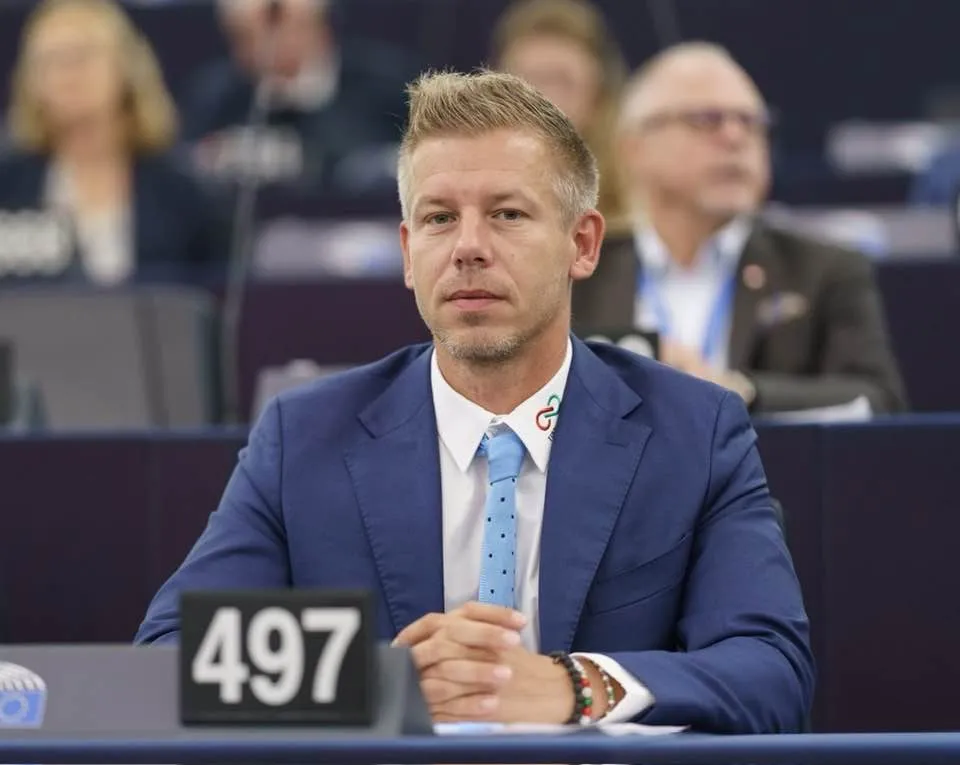
“Magyar accused Orbán’s government of systemic corruption and operating in the interests of a small circle of political and economic elites,” stated Péter Magyar, the newly elected leader of the opposition Tisza party. This declaration came after a stunning electoral victory on April 10, 2026, where Magyar ended Viktor Orbán’s 16-year reign as Prime Minister of Hungary.
Magyar’s political journey has been nothing short of remarkable. Born in 1981, he joined Fidesz in 2002, where he spent over two decades navigating the intricacies of Hungarian politics. However, his political rise began in earnest in early 2024, catalyzed by a series of events that left many Hungarians disillusioned with the ruling party.
In June 2024, the Tisza party, which was registered in 2020, captured 30% of the vote in the European Parliament elections, attracting approximately 1.3 million voters. This surge in popularity was fueled by widespread dissatisfaction with the Orbán administration, particularly following the pardon scandal that led to Magyar’s break with Fidesz. His first interview after this split, conducted on the YouTube channel Partizán, marked a turning point in his public image.
Magyar’s combative style and conservative views have drawn both support and criticism. While he has energized a broad segment of Hungarian society, his approach has also alienated some traditional Fidesz supporters. “It was a ‘painful’ election result,” Orbán lamented, acknowledging the significant shift in voter sentiment.
In the lead-up to the election, Magyar’s rallies drew massive crowds, with 50,000 people gathering on March 15, 2024, and an astonishing 100,000 attending the National March on April 6, 2024. These events underscored the growing momentum behind the Tisza party and Magyar’s vision for Hungary.
Despite his political success, Magyar’s personal life has also been tumultuous. He divorced Judit Varga in 2023 and is a father to three children. His personal experiences have shaped his political narrative, as he often speaks about the need for an “insurance policy in case I come into conflict with Orbán’s regime.” This sentiment resonates with many voters who feel vulnerable under the current government.
As Hungary transitions into this new political landscape, the implications of Magyar’s rise remain to be seen. His leadership style and policies will be closely scrutinized as he attempts to navigate the complexities of governing a nation that has been under Orbán’s influence for so long. The coming months will be critical as Magyar seeks to fulfill the promises made during his campaign and address the systemic issues he has highlighted.