Reaction from the field
The upcoming launch of NASA’s Artemis II mission on April 1, 2026, marks a significant milestone in human space exploration, aiming to send astronauts on a 10-day journey around the Moon. This mission is not just a test flight; it represents a crucial step towards establishing a sustainable human presence on the lunar surface, with the potential to reshape our understanding of space travel.
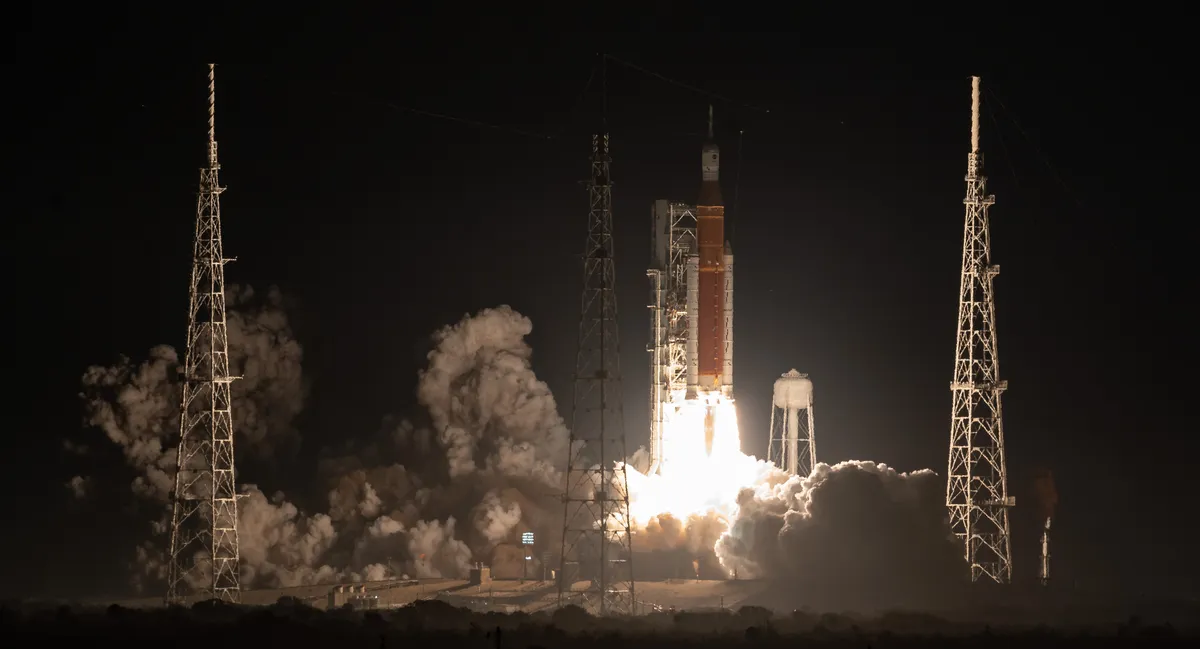
Utilizing the powerful Space Launch System (SLS) heavy lift rocket, Artemis II will carry the Orion spacecraft into orbit, traveling over 400,000 kilometers from Earth. This distance is unprecedented for a crewed mission since the Apollo program, highlighting the ambitious nature of NASA’s plans. The mission will allow astronauts to orbit the Moon’s far side, a region that has never been seen by human eyes, further enhancing our exploration capabilities.
The Artemis II crew will consist of four astronauts, including Canadian Space Agency astronaut Jeremy Hansen, who is set to make history as the first Canadian to fly to the Moon. This mission is part of a broader strategy to not only return humans to the Moon but to lay the groundwork for future exploration and development. As Scott Pace noted, “We’re about to send humans in orbit around the Moon again,” emphasizing the historical significance of this endeavor.
Upon re-entry, the Orion capsule will face extreme conditions, hitting speeds of 32,187 km/h and temperatures soaring to 2,200°C. The mission’s success will be critical in testing the spacecraft’s heat shield, which has undergone extensive development. Scott Pace remarked on the heat shield’s complex history, underscoring the challenges faced in preparing for this ambitious mission.
The Artemis program aims to establish a new and sustained future for lunar exploration, with plans for at least one Moon landing per year starting in 2028 and the construction of a Moon base by 2030. This long-term vision is a departure from the Apollo program’s focus on short visits, as Jared Isaacman stated, “This time the goal is not flags and footprints. This time the goal is to stay.” This shift in focus signifies a commitment to deeper exploration and potential colonization efforts.
As the launch date approaches, the excitement and anticipation surrounding Artemis II continue to build. NASA’s efforts are not only about reaching the Moon but also about inspiring future generations of explorers and scientists. The mission is a testament to human ingenuity and the relentless pursuit of knowledge beyond our planet.
Details remain unconfirmed regarding the final preparations and any potential challenges that may arise as the launch window opens at 6:24 PM ET on April 1, 2026. The world watches closely as NASA prepares to embark on this historic journey, marking a new chapter in the exploration of our solar system.