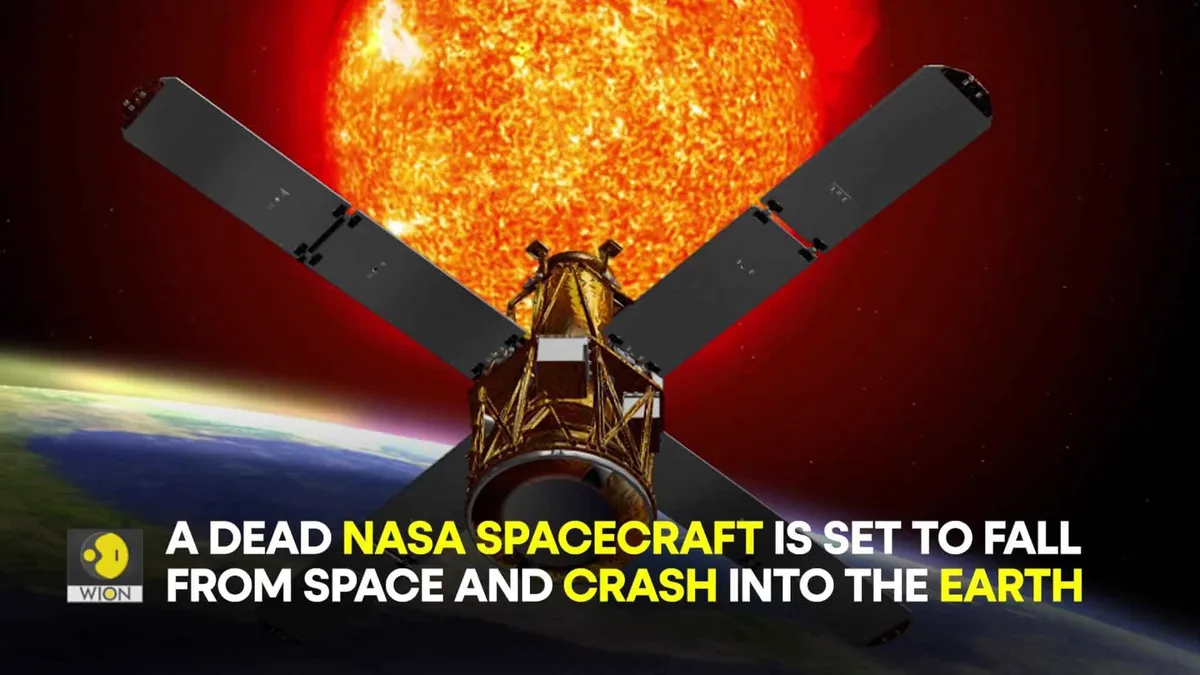
NASA Satellite Crash: Van Allen Probe A Set to Re-Enter Earth’s Atmosphere
Parts of a giant NASA satellite, the Van Allen Probe A, are expected to crash to Earth on Tuesday evening, March 10, 2026, at approximately 7:45 p.m. EDT. NASA has assessed the situation and determined that there is a low risk of harm to people, estimating the chance of injury from falling debris at about 1 in 4,200.
The Van Allen Probe A, which weighs approximately 1,323 pounds (600 kg), was launched on August 30, 2012, to study the Van Allen radiation belts that protect Earth from solar storms and cosmic radiation. The spacecraft, along with its twin, was deactivated in 2019 after running out of fuel, marking the end of its operational life.
NASA officials have stated that while most of the craft is expected to burn up upon re-entry, some components may survive the descent through the atmosphere. The overall chance of anyone being hurt by falling debris is estimated at 1 in 3,200. Additionally, with 71% of Earth’s surface covered by water, the likelihood of debris hitting land is significantly reduced.
Mark Matney, a NASA official, emphasized the minimal risk, stating, “The odds that you will be hit are one in several trillion, so quite low for any particular person.” This reassurance comes as NASA and the U.S. Space Force continue to monitor the re-entry and update predictions as necessary.
The initial uncertainty in re-entry predictions is plus or minus 24 hours, which means that while the time frame is relatively narrow, it could still shift. Observers are keeping a close watch on the situation as the re-entry time approaches.
Debris falling from space is not uncommon; over the past 40 years, approximately 5,400 tons of material are thought to have survived re-entry. However, the Van Allen Probe B, the twin of Probe A, is not expected to re-enter Earth’s atmosphere before the end of this decade, allowing for continued study of the Van Allen belts.
As the re-entry date nears, NASA will provide further updates to ensure public safety and awareness. Details remain unconfirmed regarding the exact trajectory and potential impact zones of the debris.