Introduction
NASA’s recent discoveries on Mars have captured the attention of scientists and space enthusiasts around the world. With the ongoing missions involving rovers and orbiters, a wealth of information is being uncovered about the Red Planet, making it a crucial focus for future exploration. Understanding Mars is not only significant for our knowledge of planetary science but also for the potential for human colonization and the search for past or present extraterrestrial life.
Recent Findings
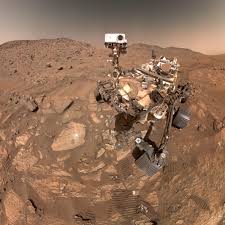
In recent months, NASA’s Perseverance rover has made groundbreaking discoveries in Jezero Crater, an ancient lakebed that may hold clues about the planet’s past. The rover has been busy conducting soil analysis and has collected samples that, when returned to Earth, could provide vital evidence of ancient microbial life that may have existed billions of years ago.
Additionally, the Mars Reconnaissance Orbiter has been making significant contributions by capturing high-resolution images that reveal how water has shaped the Martian landscape. These observations have indicated the presence of seasonal dark streaks known as ‘recurring slope lineae’ believed to be caused by briny water flow, suggesting that liquid water might still exist beneath the surface.
Technological Advances
The technological advancements adopted by NASA for its Mars missions are also noteworthy. The use of autonomous navigation in the Perseverance rover allows for more efficient exploration as it can traverse complex terrains without waiting for commands from Earth. Furthermore, the Ingenuity helicopter, which completed several successful test flights, represents a revolutionary approach to aerial exploration on another planet, enabling scientists to view Mars from a new perspective.
Conclusion
As NASA continues its exploration of Mars, the implications of these discoveries remain vast. The discoveries not only reshape our understanding of Mars’ climatic and geological history but also open new avenues for future missions that may include human exploration. The international space community is closely monitoring these developments, and the findings could potentially lead to collaborative efforts for future Mars missions, enhancing our quest for knowledge beyond Earth. With ongoing endeavors like the upcoming Mars Sample Return mission, the excitement surrounding NASA’s work on Mars is likely to only increase, promising a wealth of discoveries that could profoundly impact our understanding of life in the universe.