Introduction
The 4th Amendment to the United States Constitution is a crucial element in the protection of individual privacy rights. Ratified in 1791 as part of the Bill of Rights, it safeguards Americans against unreasonable searches and seizures by the government. This amendment remains profoundly relevant today as discussions surrounding privacy, law enforcement, and civil liberties escalate with technological advancements.
Key Provisions of the 4th Amendment
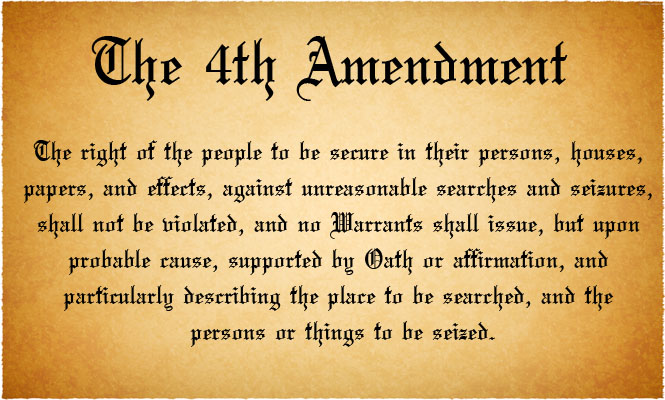
The 4th Amendment states: “The right of the people to be secure in their persons, houses, papers, and effects, against unreasonable searches and seizures, shall not be violated, and no Warrants shall issue, but upon probable cause, supported by Oath or affirmation, and particularly describing the place to be searched, and the persons or things to be seized.” This language establishes a clear legal framework requiring law enforcement to obtain warrants based on probable cause, thereby enforcing a standard of reasonableness in searches.
Recent Events and Legal Challenges
In recent years, several high-profile cases have brought the 4th Amendment into public discourse, particularly in an era of technological surveillance. For instance, the Supreme Court’s 2018 ruling in Carpenter v. United States marked a significant decision where the court ruled that law enforcement must obtain a warrant to access historical cell phone location data. This decision underscored the necessity for warrant protection in a digital age where privacy concerns are heightened.
Moreover, in 2023, various states have begun evaluating laws concerning digital privacy, as company policies on data collection and user privacy face scrutiny. As more data is stored in the cloud, the interpretation and enforcement of the 4th Amendment become pivotal in determining the scope of privacy rights in the digital landscape.
Conclusion
The 4th Amendment stands as a pillar of American democracy, essential for protecting individual freedoms and rights against governmental overreach. As society evolves, so does the necessity for re-examining what constitutes unreasonable searches and seizures, particularly in the realm of advanced technology. Ongoing legal challenges and state-level initiatives are likely to continue shaping the interpretation of the 4th Amendment, ensuring that privacy remains a vital discussion point in America. Citizens must stay informed and involved in these conversations to preserve their fundamental rights.