Introduction
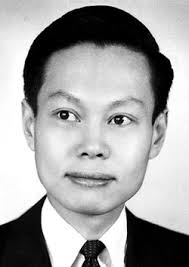
Yang Zhenning, known as Chen-Ning Yang in the West, is a renowned Chinese-American physicist who has significantly influenced the field of theoretical physics. His discoveries in particle physics and statistical mechanics have laid foundational stones for modern physics, earning him a Nobel Prize in 1957. This article explores Yang’s life, his notable achievements, and the ongoing relevance of his work in today’s scientific landscape.
Early Life and Education
Born on September 22, 1922, in Hefei, Anhui, China, Yang showed an early aptitude for mathematics and science. He pursued his education at the National Southwestern Associated University in Kunming and later earned a Ph.D. in physics from Princeton University in the United States. His academic journey was characterized by extraordinary intellect and an innate curiosity about the universe.
Significant Contributions to Physics
Yang’s groundbreaking work has transformed the understanding of fundamental particles and their interactions. He is best known for the Yang-Mills theory, which has become essential in the field of gauge theory, serving as a cornerstone for the Standard Model of particle physics. His collaboration with Robert Mills in the 1950s introduced a framework that describes how elementary particles are influenced by force carriers, significantly impacting the future of quantum field theory.
In 1956, Yang and fellow physicist Tsung-Dao Lee proposed a revolutionary hypothesis that led to the experimental discovery of parity violation. This work questioned the earlier assumptions of symmetry in physics, reshaping the expectations of how fundamental particles behave. Their efforts were recognized with the Nobel Prize in Physics in 1957, marking a pivotal moment in the scientific community.
Later Career and Legacy
Beyond his Nobel achievements, Yang has held prestigious academic positions throughout his career, including professor roles at renowned institutions such as Stony Brook University and the Chinese Academy of Sciences. He has authored numerous papers and contributed to various scientific organizations, advocating for the advancement of global scientific collaboration.
Yang Zhenning is also known for his commitment to education and mentorship, inspiring countless young physicists across the globe. His lifetime of work emphasizes the importance of curiosity and perseverance, making him a celebrated figure not only in physics but also in fostering scientific inquiry.
Conclusion
Yang Zhenning continues to be an iconic figure whose contributions have had a lasting impact on theoretical physics. As the world faces new scientific challenges, the principles and theories established by Yang play a crucial role in driving innovations and discoveries in fundamental physics. As aspiring scientists look forward, Yang’s legacy serves as a constant reminder of the power of inquiry, knowledge, and the pursuit of truth in understanding our universe.