Introduction: The Importance of Pangea
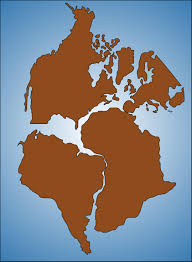
Pangea, the supercontinent that existed during the late Paleozoic and early Mesozoic eras, plays a crucial role in the understanding of Earth’s geological and biological history. Formed approximately 335 million years ago, Pangea brought together nearly all the Earth’s landmasses into a single, massive continent. This pivotal formation not only influenced the distribution of species and ecosystems but also shaped the patterns of continental drift, which continue to affect our planet.
Formation and Breakup of Pangea
Pangea’s formation is understood through the theory of plate tectonics, which explains how large plates of Earth’s crust move and interact. These tectonic movements led to the amalgamation of existing land masses and ultimately created a colossal land area surrounded by the Panthalassa ocean. However, around 175 million years ago, during the Jurassic period, Pangea began to break apart due to tectonic activities within the Earth’s mantle. This breakup not only led to the formation of today’s continents but also started a new chapter in Earth’s geological timeline.
Effects on Biodiversity
The existence of Pangea greatly influenced the evolution and distribution of prehistoric flora and fauna. During its existence, species could spread across the unified landmass, leading to an increase in biodiversity. However, as Pangea divided, geographic isolation began to dictate the evolutionary paths of species, contributing to both speciation and extinction events. The fossils found today in disparate continents provide evidence of Pangea’s role in the migration and adaptation of various species.
Geological Evidence of Pangea
Numerous geological and paleontological findings support the existence of Pangea. Similar rock formations and mountain ranges can be found on different continents, indicating they were once connected. For instance, the Appalachian Mountains in North America align with the Caledonian Mountains in Scotland and Scandinavia, supporting the theory of a connected supercontinent. Fossils of identical species found on separate continents highlight the continuity that Pangea provided.
Conclusion: Significance of Pangea for Today
The legacy of Pangea is not only significant for historical geology but also for understanding contemporary environmental challenges. The study of Pangea gives insight into climate change, migration patterns, and even natural disasters like earthquakes and volcanic eruptions. As scientists continue to examine Pangea’s impact, our appreciation for the dynamic processes that shape the Earth deepens. The lessons learned from Pangea remind us how interconnected the planet’s systems operate and underscore the importance of preserving biodiversity in the face of ongoing environmental changes.