Introduction
As winter descends upon various regions in the United States, weather phenomena such as freezing fog are becoming increasingly common. The freezing fog advisory is a crucial weather warning that informs residents about potentially dangerous road conditions due to icy visibility and surfaces. Understanding this advisory is vital for ensuring safety during travel and outdoor activities.
What is Freezing Fog?
Freezing fog occurs when tiny supercooled water droplets remain suspended in the air and freeze upon contact with cold surfaces, creating a layer of ice. This phenomenon typically arises when temperatures drop below freezing, allowing humidity in the air to condense into fog. The result is often hazardous driving conditions as road surfaces become slick and visibility decreases.
Recent Freezing Fog Advisories
In recent weeks, the National Weather Service (NWS) has issued multiple freezing fog advisories across several states, including Minnesota, North Dakota, and Montana. These advisories are prompted by forecasts predicting temperatures hovering around the freezing mark combined with high humidity levels. For example, on January 15, 2023, the NWS noted that many regions experienced travel disruptions due to the icy conditions resulting from freezing fog.
According to meteorologists, freezing fog is especially prevalent during the early morning hours when temperatures are at their lowest. The combination of calm winds and moist air is a recipe for the formation of thick fog that can freeze rapidly.
Impacts of Freezing Fog
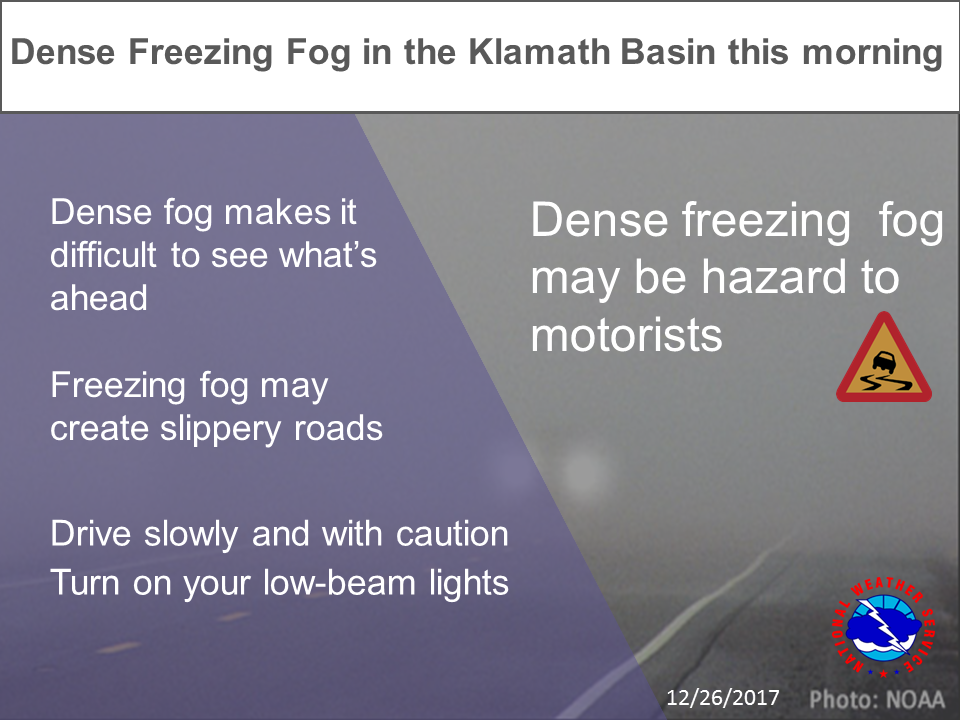
Freezing fog poses significant risks not only for motorists but also for pedestrians and cyclists. The icy conditions can lead to accidents, slip-and-fall incidents, and delayed emergency services. The NWS advised residents to limit travel, if possible, during freezing fog events and to take caution when walking or biking outside. If driving is necessary, slower speeds, increased following distances, and the use of headlights can help mitigate risks.
Conclusion
As freezing fog advisories become part of the winter landscape, it’s essential for individuals to heed these warnings for their safety. Awareness of weather conditions, along with preparation and caution while traveling, can prevent accidents and ensure safer outcomes during these chilly months. As meteorologists monitor patterns and further advisories will likely be issued, staying informed is key to adapting to winter’s unpredictability.