Introduction
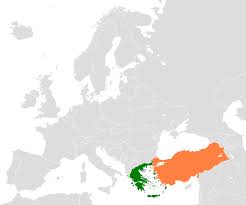
The relationship between Greece and Turkey has been a focal point of geopolitical tension for decades. Both nations, steeped in rich history and cultural significance, have experienced conflicts that not only affect their bilateral relations but also impact the broader stability in the Eastern Mediterranean. This complex relationship is characterized by territorial disputes, national identity, and regional alliances, making it a critical issue to understand, especially in the context of current events.
Historical Context
Greece and Turkey have a long and turbulent history that dates back to the Ottoman Empire. Following the Greek War of Independence in the early 19th century, both countries’ national identities began to form, often in opposition to one another. The population exchanges and the conflicts of the early 20th century, particularly the Greco-Turkish War (1919-1922), exacerbated tensions, and disputes over territories such as Cyprus and the Aegean Sea have continued to this day.
Current Developments
In recent months, tensions between Greece and Turkey have escalated, particularly surrounding issues of airspace, maritime boundaries, and migrant flows. According to NATO reports and statements from both governments, military maneuvers in the Aegean Sea have intensified. Turkey’s assertions of rights over a significant portion of the Aegean Sea clash with Greece’s claims to islands and exclusive economic zones, resulting in confrontational encounters. Moreover, the issue of migration, with Turkey housing millions of refugees, has exacerbated the political stakes for both nations, prompting Greece to seek more support from the European Union.
Pivotal International Response
The international community, including the U.S. and the European Union, has urged both countries to engage in dialogue and de-escalate their military posturing. Diplomatic efforts have focused on mediation and encouraging confidence-building measures. Several talks have been initiated, but solutions remain elusive as both nations cling to their historical narratives and national interests.
Conclusion
As Greek-Turkish relations continue to navigate through turbulent waters, the significance of finding common ground cannot be overstated. The resolution of conflicts arising from historical grievances, territorial disputes, and national interests is essential not only for the countries involved but also for regional stability in the Eastern Mediterranean. Moving forward, the prospects for peace will depend on diplomatic engagement and the willingness of both nations to compromise. Continued monitoring of this situation is crucial as it not only affects Greece and Turkey but also has wider implications for NATO and the European Union.