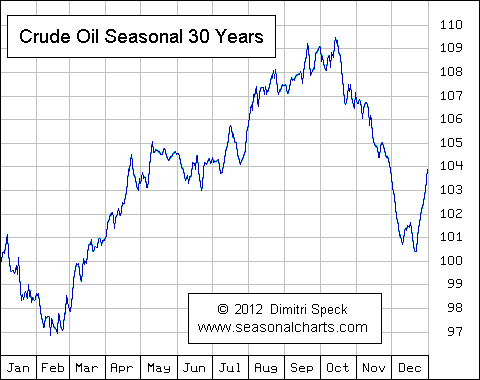
Introduction
Oil prices have been a critical topic of discussion in both economic and geopolitical contexts in recent months. As fluctuations in these prices can significantly influence the economy, energy sector, and cost of living, understanding the factors behind these changes is essential for consumers and businesses alike.
Current Trends in Oil Prices
As of October 2023, oil prices have seen a notable increase, reaching levels not witnessed since early 2020. Brent crude, the international benchmark, is hovering around $92 per barrel, while West Texas Intermediate (WTI) is close to $87 per barrel. This spike can be attributed to several interlinked factors:
- Geopolitical Tensions: Ongoing conflicts in oil-rich regions, such as the Middle East, have contributed to apprehension among traders and investors, driving prices higher due to potential supply disruptions.
- OPEC+ Production Cuts: The Organization of the Petroleum Exporting Countries (OPEC) and its allies, including Russia, have continued to enforce production cuts aimed at stabilizing the market. These cuts have limited the supply of oil, leading to upward pressure on prices.
- Increased Global Demand: With economies recovering from the effects of the COVID-19 pandemic, there has been a rebound in global oil demand, particularly in Asia. Countries like China and India are ramping up imports, further straining supply.
Implications for Consumers
This upward trend in oil prices doesn’t just affect those in the oil industry; it has broader implications for the average consumer. Higher oil prices can lead to increased transportation and heating costs, which can impact everything from commuting expenses to grocery prices. In September 2023, the American Automobile Association (AAA) reported an increase in gasoline prices, reflecting the rising crude oil costs, which reached an average of $3.80 per gallon for regular gasoline.
Conclusion and Outlook
As we move forward into the fall and winter months, market analysts predict that oil prices may continue to be volatile. Key indicators, such as geopolitical developments and possible changes in OPEC’s production strategy, will play significant roles in determining future price movements. Consumers should prepare for continued fluctuations, keeping in mind that oil prices influence not just energy costs but also the broader economic landscape. Monitoring these trends will be crucial for stakeholders at all levels.