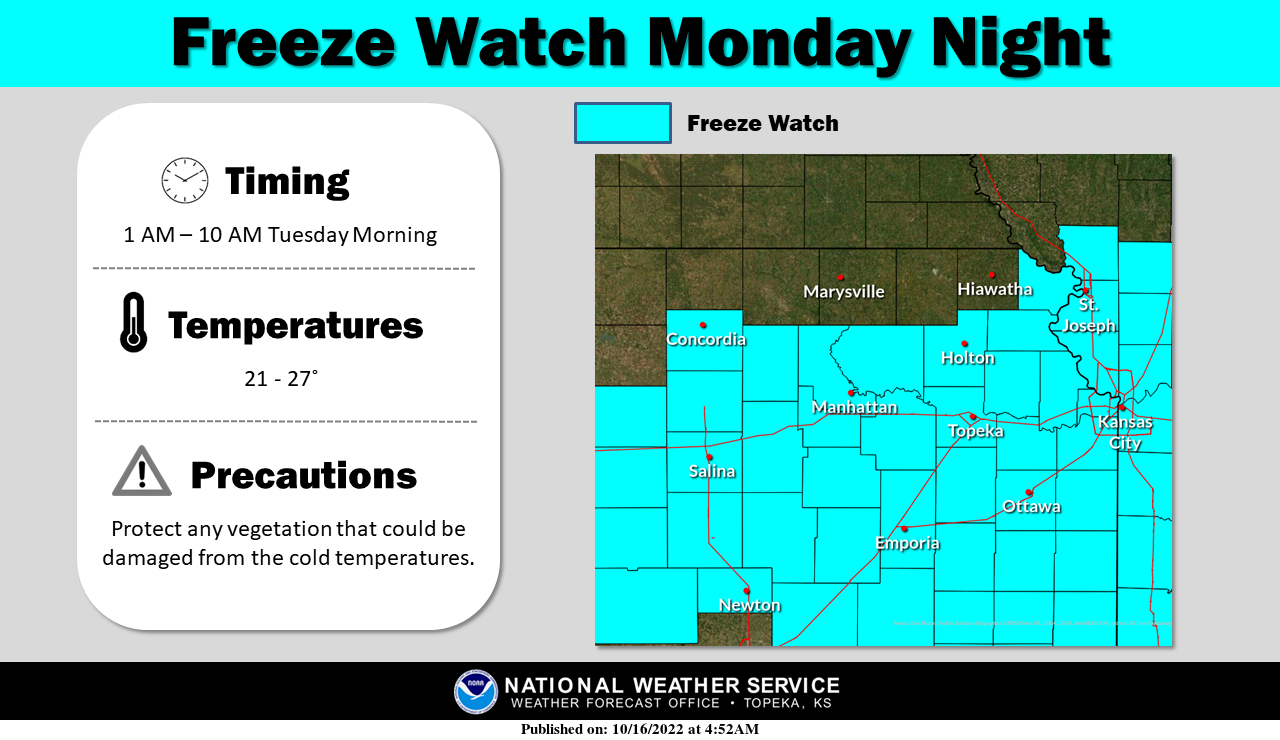
Introduction to Freeze Watches
As colder months approach, the term ‘freeze watch’ becomes increasingly relevant, particularly for those in agriculture, outdoor planning, and weather forecasting. A freeze watch is a weather alert issued when there’s a potential for temperatures to dip to freezing or below, which can damage sensitive crops, affect outdoor activities, and pose risks to unprotected plumbing.
Recent Events and Details
In October 2023, the National Weather Service (NWS) issued multiple freeze watches across regions in the Midwest and Northeast United States as forecasts predicted temperatures to plummet overnight. These watches indicate that conditions are favorable for a freeze, urging residents to take precautions for sensitive vegetation and ensure the protection of vulnerable plumbing.
Farmers particularly feel the impact of freeze watches as the end of the growing season approaches. A sudden freeze can wipe out crops that are not yet harvested, leading to significant economic losses. In areas like Iowa and Indiana, farmers are monitoring temperatures closely and preparing to cover or harvest crops ahead of predicted freezes.
The Importance of Freeze Watches
Freeze watches play a crucial role in emergency management and preparedness. They provide advance warning to individuals and communities, allowing them to take necessary steps to mitigate potential damage. For homeowners, this may include draining outdoor plumbing and covering plants with frost cloths or blankets. For municipalities and agricultural sectors, planning and response strategies can be developed to save resources and minimize loss.
Conclusion: Significance of Monitoring Freeze Watches
Understanding and responding to freeze watches are critical for preventing damage during cold spells. As climate patterns continue to change, the frequency and intensity of freeze watches may vary, making it essential for residents to stay informed. By following weather alerts and preparing accordingly, individuals can protect their property and crops while contributing to community resilience against the unpredictability of winter weather.