Impact of Whirling Disease Detection
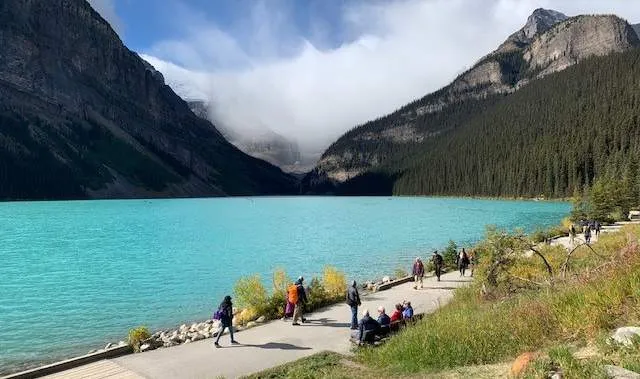
The recent detection of whirling disease in Lake Louise, Alberta, has raised significant concerns regarding the health of local fish populations. This infectious disease, which affects fish but is not harmful to humans or other mammals, poses a threat to aquatic ecosystems in the area.
Parks Canada confirmed that whirling disease was found in Lake Louise, marking the first occurrence of the disease in this location. The last testing for whirling disease in Lake Louise was conducted in 2016, indicating a potential gap in monitoring.
Francois Masse, a representative from Parks Canada, stated, “It’s most likely whirling disease was introduced by mud or water on a watercraft or angling equipment.” This highlights the risks associated with human activity in natural water bodies, particularly concerning the spread of aquatic invasive species.
In response to the detection, new regulations will be implemented to mitigate the spread of the disease. Effective spring 2026, paddling and the use of large inflatables will be banned at Bow Lake and Moraine Lake, as well as Lake Minnewanka. However, Lake Louise will remain open to paddling and other water activities despite the recent findings.
Bow Lake, in particular, is home to species at risk, which adds another layer of concern regarding the impact of whirling disease on local biodiversity. As Marie Veillard from Parks Canada noted, “Lake Louise does not carry the same conservation concerns as others in the region,” suggesting that the immediate impact may vary across different lakes.
The interconnected river systems in the area pose a risk of spreading aquatic invasive species downstream beyond park boundaries, further complicating management efforts. Parks Canada is likely to increase monitoring and public awareness initiatives to address these challenges.
As the situation develops, the full extent of the impact of whirling disease on local fish populations and ecosystems remains uncertain. Details remain unconfirmed regarding the long-term implications for the affected lakes and their biodiversity.