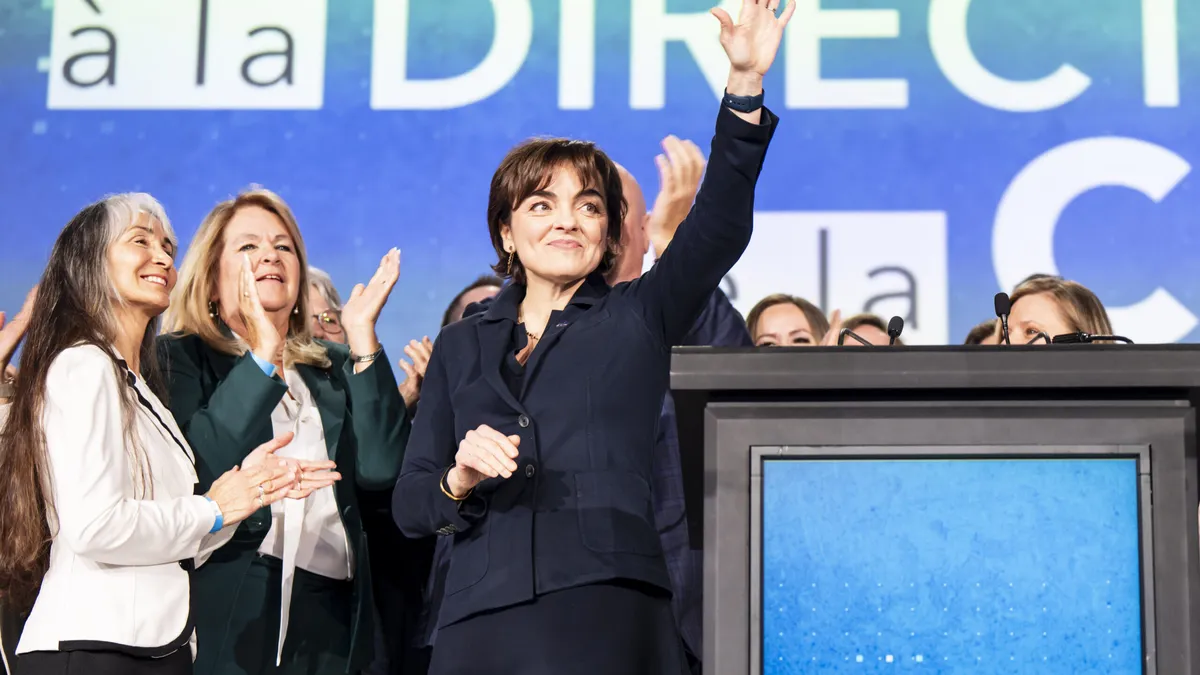
Christine Fréchette has been chosen as the new leader of the Coalition Avenir Québec (CAQ) and premier-elect of Quebec, succeeding François Legault. This leadership change comes at a critical time for the province, as Fréchette won the leadership race with 57.9% of the vote from 15,833 party members, indicating strong support within the party.
Fréchette’s election is historic; she is the second woman to serve as premier of Quebec, following Pauline Marois. Her leadership campaign focused on pressing issues such as economic reform, immigration, housing, and healthcare, reflecting the concerns of many Quebecers.
Before her rise to the premiership, Fréchette was elected as the Member of the National Assembly (MNA) for Sanguinet in 2022 and served as the CAQ’s Minister of the Economy, Innovation and Energy. Her experience in these roles has positioned her as a capable leader ready to tackle the challenges ahead.
François Legault announced his resignation on January 11, 2026, which triggered the CAQ leadership race. He led the party to two consecutive majority governments starting in 2018, and his departure marks the end of an era for the CAQ.
During her campaign, Fréchette garnered support from 41 MNAs and the CAQ’s youth wing, demonstrating her ability to unite various factions within the party. The leadership race saw a high turnout, with 77.1% of CAQ members casting their ballots.
Fréchette’s age of 56 and her previous role as deputy chief of staff to former Parti Québécois minister Jean-François Lisée add to her political credentials. Additionally, she was a member of the board for the Conseil du statut de la femme before entering politics, showcasing her commitment to women’s issues.
As Quebec prepares for the next provincial election scheduled for October 5, 2026, Fréchette’s leadership will be closely scrutinized. Her ability to address key issues and maintain party unity will be crucial in the lead-up to the election.
In her victory speech, Fréchette remarked, “You have voted for another style of leadership so that a new generation can lead Quebec,” signaling a shift in the political landscape. Meanwhile, Legault acknowledged the tensions that often accompany leadership transitions, stating, “A leadership race creates tensions, it’s normal.”
Details remain unconfirmed regarding the specific policies Fréchette plans to implement as premier, but her focus on economic and social issues suggests a proactive approach to governance.